The National Human Rights Commission (NHRC) has issued a stark warning: persistent human rights violations continue to threaten The Gambia's fragile democratic gains, despite the country’s notable democratic and legislative progress in recent years. The Commission stated that this threat endures, showing concerns about the durability of the advancements made in the West African nation. This assessment from the NHRC notes the ongoing challenges faced by The Gambia as it strives to solidify its democratic foundations. The Commission's warning emphasizes that the momentum of recent reforms must be sustained and deepened to truly safeguard human rights for all citizens.
Commission's Grave Concerns
The National Human Rights Commission (NHRC) identified several critical issues in its findings, painting a concerning picture of the human rights landscape. These included overcrowded and unsanitary detention facilities, which pose significant risks to the health and dignity of detainees. The Commission also noted prolonged pretrial detention, a practice that infringes upon individuals' right to a speedy trial and can lead to undue suffering. Inadequate prison healthcare was another serious concern, noting the urgent need for improved medical provisions within correctional facilities. The NHRC pointed to the excessive use of force by law enforcement agencies, stressing the importance of accountability and adherence to human rights standards by security personnel. These concerns are compounded by an observed rise in violent crime across the country, which further destabilizes communities and impacts public safety.
Separately, Commissioner Emmanuel D. Joof raised alarm over gender-based violence, specifically mentioning violence against women and girls. Joof noted the continued practice of Female Genital Mutilation (FGM), a harmful traditional practice that violates the rights and bodily integrity of women and girls. He also drew attention to instances of rape, child abuse, and child marriage, all of which represent severe breaches of human rights and require concerted efforts for prevention and prosecution. He further pointed to the growing number of children who are out of school, indicating broader societal challenges that deprive young people of their right to education and future opportunities. These issues collectively show the urgent need for full interventions to protect vulnerable populations.
Broader Human Rights Issues
Climate change, coastal erosion, flooding, illegal sand mining, overfishing, and food insecurity are increasingly becoming human rights issues, according to the National Human Rights Commission. The NHRC noted that these environmental and economic challenges have direct impacts on the rights and well-being of the population, affecting access to livelihoods, safe housing, and adequate nutrition. The Commission's full approach acknowledges the interconnectedness of environmental degradation and human rights.
The Commission also emphasized the critical role of the media in addressing human rights. It stated that media outlets should not limit their reporting to violations after they occur, but should actively contribute to preventing them. This preventative role, the NHRC added, can be achieved through consistent public education and fostering informed public debate on relevant issues. By engaging proactively, the media can empower citizens and hold duty bearers accountable, thereby strengthening the overall human rights framework.
Call for Renewed Commitment
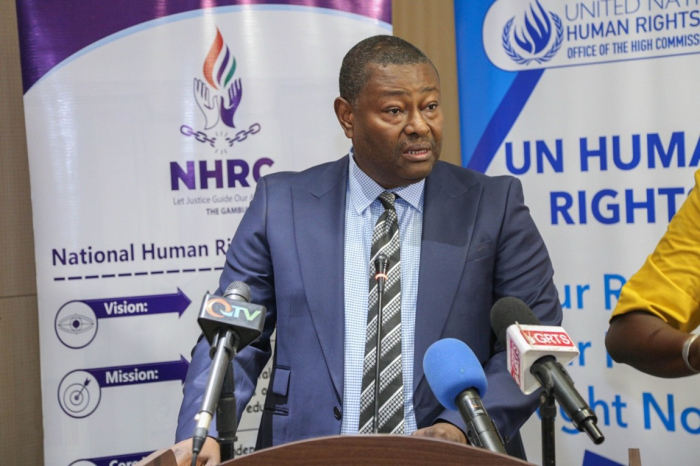
NHRC Chairperson Emmanuel D. Joof urged government institutions, security services, the judiciary, the media, and citizens to renew their commitment to protecting and promoting human rights. Joof stated that human rights affect every Gambian, from schoolchildren to farmers, market vendors, and police officers. "Human rights are everybody’s business," he emphasized, showing the universal applicability and importance of these fundamental protections. The Chairperson clarified the NHRC's role, asserting, "We are neither an opposition to government nor its mouthpiece." He further explained that the Commission's mandate is to hold duty bearers accountable while working constructively with all stakeholders involved in human rights, ensuring a balanced and effective approach to its oversight responsibilities.
Foundation for Development
The National Human Rights Commission (NHRC) was established under The Gambia's 2017 Act, operating as an independent body. The Commission’s structure ensures it is accountable exclusively to the National Assembly, a design intended to safeguard its autonomy in monitoring and reporting on human rights issues. This foundational legal framework shows the NHRC's role as a key institution for democratic oversight and human rights protection within the country. Its independence allows it to assess the human rights situation without external influence, providing essential checks and balances as The Gambia navigates its democratic transition and institutional reforms. This accountability to the National Assembly reinforces its non-partisan stance and its commitment to serving the interests of the Gambian people in upholding their rights.