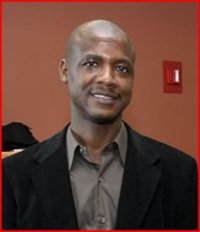
Veteran journalist Alagi Yorro Jallow has critically examined the leadership of the United Democratic Party (UDP) and its prominent leader, Ousainou Darboe, specifically questioning the party's moral credibility amidst the ever-shifting landscape of Gambian political alliances. Jallow's incisive commentary delves into the perceived inconsistencies between Darboe's past declarations regarding the Alliance for Patriotic Reorientation and Construction (APRC) and the UDP's subsequent engagement with, and absorption of, numerous figures who previously served under the APRC administration. This critique, delivered by a seasoned observer of Gambian politics, forces a re-evaluation of the principles guiding one of the nation's most influential political entities.
Jallow meticulously noted Darboe's previous unequivocal stance, where the UDP leader had explicitly stated that any alliance between the UDP and the APRC would be "incompatible" and, more significantly, a "betrayal" of the countless victims who suffered under the repressive regime of Yahya Jammeh. Darboe had publicly indicated that the UDP's decision to break ties with President Adama Barrow was primarily due to Barrow's perceived collaboration with the APRC. However, Jallow argues with compelling evidence that the UDP's current strategy, which involves the absorption and promotion of former APRC stalwarts into its own ranks, directly contradicts Darboe's earlier, emphatic declaration that the APRC was fundamentally 'incompatible' for any form of alliance. This stark contrast, Jallow contends, raises profound questions about the party's consistency, its adherence to stated principles, and indeed, its political memory within The Gambia's complex political environment.
UDP's Embrace of Former APRC Figures
Since Yahya Jammeh’s departure from power in 2017, a key moment in Gambian history, the United Democratic Party (UDP) has systematically incorporated several senior figures who were prominent during the APRC era into its organizational structure. This strategic move, according to Jallow, marks a significant departure from the party's previously articulated stance. Among these individuals is Honourable Suku Singhateh, a former APRC National Assembly Member who represented the Badibou constituency. Singhateh's political trajectory saw him transition from the APRC to later join the UDP, where his influence grew considerably within the party's hierarchy. During his tenure with the UDP, he held significant positions, including National Organizing Secretary, Chairman of the National Campaign Committee, and Chairman of the Fundraising Committee, showing his substantial role before his eventual departure in 2021.
The extent of the UDP's embrace of former APRC figures is further illustrated by specific appointments made during Ousainou Darboe's time as Foreign Minister. It was during this period that Darboe recommended Abdoulie Bojang, who served as the last Speaker of the National Assembly under Jammeh's rule, for the key ambassadorial post to South Africa. This recommendation drew particular scrutiny because Abdoulie Bojang had previously presided over, and actively voted for, the controversial State of Emergency motion. This motion, enacted in the tumultuous aftermath of the 2016 presidential election, was widely understood as a deliberate attempt to subvert President Barrow’s legitimate electoral victory and prolong Jammeh's hold on power. Jallow suggests that such an appointment, given Bojang's history, directly challenges the UDP's claims of principled opposition to the former regime's enablers.
Another notable figure who transitioned into the UDP's senior membership is Momodou Sabally. Sabally had served in high-profile roles as Secretary General and Head of the Civil Service during Jammeh’s administration, making him a central figure in the former regime's governance. His name subsequently appeared in the Janneh Commission report, a significant investigative body tasked with uncovering and documenting the widespread financial mismanagement and illicit enrichment that characterized the former regime. His inclusion in the UDP's senior ranks, despite his past associations and the findings of such a critical commission, is a point of contention for Jallow.
Lamin Babadinding Jobarteh, a former Justice Minister and a senior officer within the National Intelligence Agency (NIA) under Jammeh, similarly became a member of the UDP. Jobarteh's name carries particular weight, as it appears in the proceedings of the Truth, Reconciliation and Reparations Commission (TRRC). The TRRC, established to investigate human rights abuses during the Jammeh era, heard allegations related to torture and the extrajudicial Mile 9 executions, in which Jobarteh's name was mentioned. The welcoming of such individuals into the UDP, especially given the party's historical alignment with human rights and democratic principles, is precisely what Jallow notes as a significant contradiction.
The UDP also extended its welcome to Major Momodou Bojang, who previously held influential roles as Interior Minister and Governor under Jammeh. Major Momodou Bojang's tenure as Interior Minister in 1999 is particularly remembered for the arrest of journalists Alagi Yorro Jallow and Alieu Badara Sowe, an event that shows the repressive environment for media under the former regime. The integration of individuals with such histories into the UDP's fold, Jallow argues, starkly contrasts with Darboe's previously articulated statements regarding the APRC. Ousainou Darboe had unequivocally stated that a UDP-APRC alliance would be "incompatible" and a "betrayal" of victims under Yahya Jammeh. Darboe further clarified that the UDP had explicitly disassociated itself from President Barrow specifically because Barrow chose to work with the APRC, making the UDP's current embrace of former APRC figures a perplexing and ethically challenging development in Gambian politics.
Contradictions in Darboe's Stance and UDP's Practices
Alagi Yorro Jallow’s critique specifically questions the United Democratic Party’s consistency, principle, and political memory in The Gambia, pointing to a discernible gap between rhetoric and reality. Ousainou Darboe, the leader of the UDP, had previously stated with conviction that a UDP-APRC alliance would be “incompatible” and would unequivocally “betray” victims under Yahya Jammeh’s authoritarian rule. Darboe further added that the party broke with President Barrow precisely because Barrow worked with the APRC, thereby establishing a clear ideological boundary. However, as Jallow meticulously documents, several figures with past ties to the APRC, often deeply implicated in the former regime's machinery, have since not only joined but also risen within the UDP's ranks.
This pattern of absorption extends to other prominent individuals. M.A. Bah, a notable figure from the Alliance for Patriotic Reorientation and Construction, notably switched allegiance to the United Democratic Party, a move that, while not unique in Gambian politics, contributes to the narrative of shifting loyalties. Tombong Saidy and Almamy Taal currently serve as official spokespersons for the UDP, holding visible and influential positions within the party's communication apparatus. Almamy Taal, in particular, was a former judge appointed by Jammeh and held senior positions within the APRC government during the previous administration. His current role as a UDP spokesperson, representing the party's public image and messaging, is another example Jallow uses to highlight the perceived contradictions.
The list of former APRC affiliates within the UDP continues. Honorable Lamin Kebba Jammeh, who served as a National Assembly Member for the Illiasa constituency under the APRC banner, is now a ranking member of the UDP, holding significant internal influence. Lare Sisay, a figure with deep historical ties to the former regime, having been the first Secretary-General of the APRC during the 1994 junta that brought Jammeh to power, also became a senior member of the United Democratic Party after Yahya Jammeh’s fall. Even Dr. Sedat Jobe, who served as Foreign Minister under Yahya Jammeh, similarly joined the UDP. During Darboe’s tenure as Foreign Minister, Dr. Sedat Jobe was appointed Ambassador to France, an appointment that also drew considerable scrutiny given his prior role and his association with the very regime the UDP claimed to oppose. These instances, taken collectively, form the core of Jallow's argument: that the UDP's actions appear to undermine its stated principles and its leader's past declarations.
The Broader Landscape of Gambian Politics
Alagi Yorro Jallow’s critique extends beyond the specific actions of the UDP to offer a broader, more systemic observation about Gambian party politics. He states with conviction that the political landscape in The Gambia frequently lacks clear ideology and consistent principles, often appearing to be driven more by pragmatic considerations than by deeply held convictions. He asserts that political parties, across the spectrum, often embrace individuals with checkered pasts, a practice he identifies as being driven primarily by the relentless pursuit of electoral advantage rather than a commitment to moral rectitude or accountability. Jallow argues that this widespread strategy blurs ethical lines within the political landscape, making it difficult for the public to discern genuine principle from opportunistic maneuvering.
Jallow also contends that, given the widespread nature of these political compromises, no political party in The Gambia can genuinely claim a monopoly on the moral high ground, particularly if they have, at some point, associated with or absorbed former allies of Yahya Jammeh's regime. He maintains that this association, regardless of the perceived political benefits, inherently compromises any such claim, irrespective of the party's historical stance or its founding principles. The very act of incorporating individuals linked to a regime responsible for widespread human rights abuses and corruption, Jallow suggests, taints any assertion of moral superiority. This perspective challenges all political actors to critically examine their alliances and the implications of those choices.
Jallow emphasizes that parties must confront their internal contradictions and openly acknowledge the compromises made in their political strategies. He suggests that a failure to do so fundamentally undermines their credibility and erodes the public's trust in their stated values and political platforms. This critical perspective notes a perceived and concerning gap between political rhetoric, which often speaks of justice and accountability, and the practical actions observed in the Gambian political arena. For Jallow, this discrepancy is not merely a matter of political expediency but a profound challenge to the integrity of the nation's nascent democratic institutions.
A Call for Principled Politics
In his full analysis, Alagi Yorro Jallow examines Ousainou Darboe's recent statements regarding potential political alliances, noting what he perceives as an apparent and troubling contradiction. Darboe previously stated, with considerable force, that a UDP-APRC alliance would be "incompatible" and would fundamentally "betray" the victims who suffered under Yahya Jammeh's oppressive rule. Darboe further reinforced this position by asserting that the UDP broke with President Barrow specifically because Barrow chose to work with the APRC, thereby drawing a clear line in the sand regarding the party's ideological stance. Jallow, therefore, concludes that political credibility, particularly for parties and their leaders, rests squarely on coherence and consistency between their words and their actions.
He issues a fervent call for honesty and unwavering consistency from elder statesmen and women within Gambian politics, arguing that their leadership is key in setting the moral tone for the nation. Jallow also passionately advocates for a deep and abiding commitment to practicing principles, not merely preaching them from political pulpits. He posits that this commitment to ethical conduct and transparency is absolutely essential to maintain public trust and to uphold the integrity of the political landscape, which is still fragile in the post-Jammeh era. Without this foundational integrity, Jallow implies, the very fabric of Gambian democracy risks being undermined by cynicism and disillusionment. His critique serves as a poignant reminder that true political leadership demands an unwavering adherence to values, even when faced with the allure of short-term electoral gains.