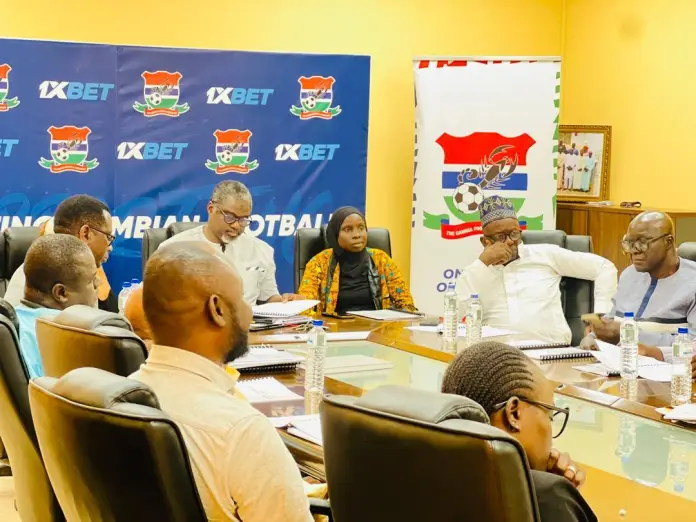
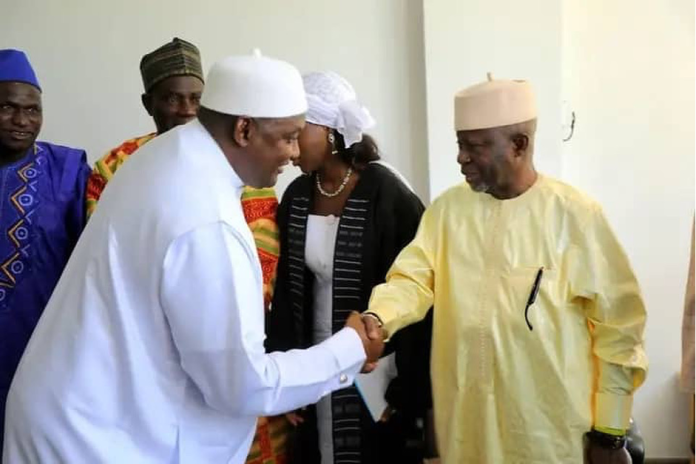
On April 29, 2026, the Ministry of Lands, Regional Government and Religious Affairs convened a national stakeholder validation workshop in The Gambia. This significant event, funded by the World Bank-supported WACA Project, was held to address critical issues pertaining to land administration and policy in the nation. The workshop agenda specifically focused on two key documents: the National Land Policy Communication Strategy and the Real Estate Agents Bill. These initiatives show the government's stated intention to reform land governance, a sector fraught with complexities and historical grievances. The timing of this workshop followed closely on the heels of a provocative essay published earlier in the month. On April 12, 2026, the essay 'What If We Stop Performing the Lie?', the third in The Architecture of Predation trilogy, questioned the profound implications of communities potentially refusing state-mandated performances, suggesting a fundamental challenge to established narratives of state authority over land.
Permanent Secretary (Technical) Ebrima Sissawo provided a stark illustration of the widespread nature of land-related conflicts within the country. He stated that land-related issues constitute a staggering seventy-five percent of all court cases in The Gambia, noting the immense burden these disputes place on the judicial system and the significant societal unrest they generate. This statistic alone shows the urgent need for full land reforms and effective dispute resolution mechanisms. The workshop saw the attendance of several key figures, indicating the high-level attention given to these discussions. The Standard Newspaper reported that "The Inspector General of Police and the Commissioner General of the Gambia Revenue Authority occupied seats," signifying the involvement of law enforcement and fiscal authorities in land matters. The Director of the State Intelligence Services also featured prominently, with The Standard Newspaper noting, "The Director of the State Intelligence Services appeared as item twenty-four on the formal Ministry invitation." The presence of such diverse governmental bodies suggests a multi-faceted approach to land governance, extending beyond traditional land management. The Ministry concluded the workshop by reaffirming its commitment to land reforms that foster peace, reduce disputes, and support national development, articulating a vision for a more stable and equitable land tenure system.
Historical Land Rights and State Claims
The author of 'The Architecture of Predation' series presented a compelling argument regarding the historical basis of land ownership in The Gambia, challenging the state's perceived dominion over vast tracts of land. The author asserted that the Gambian state possesses no original title to land outside the former Colony, a claim that fundamentally questions the legitimacy of state land acquisition in the Protectorate. According to this perspective, the Protectorate, established in 1894, functioned primarily as a management contract rather than a transfer of ownership, implying that indigenous land rights remained intact. The author contended that Independence in 1965 conveyed sovereign administration to the new Gambian state, but crucially, it did not automatically transfer original land title from communities to the state. This argument suggests a critical distinction between administrative authority and fundamental ownership.
In a move that the author views as an attempt to appropriate community land, the State Lands Act 1991 subsequently sought to assert state ownership through legislative means, effectively bypassing historical land claims and traditional tenure systems. This legislative assertion, from the author's viewpoint, represents a significant shift in power dynamics, centralizing control over land in the hands of the state.
Across the former Protectorate, communities have held ancestral land for centuries, a tenure system that significantly predates colonial intervention and subsequent legislative enactments. These indigenous landholding practices predate the establishment of the Colony, the Protectorate itself, every gazette, every lease document, and every administrative ordinance issued by colonial or post-colonial authorities. Indigenous custodianship relied heavily on lineage memory, intricate oral boundary knowledge passed down through generations, and community consensus as the basis for managing and allocating land. This traditional system, deeply embedded in the cultural and social fabric of these communities, was systematically devalued and often undermined by colonial legal frameworks. These imported legal systems frequently failed to recognize or adequately account for the complexities and legitimacy of established customary practices, leading to a disconnect between formal law and lived realities.
The Truth, Reconciliation and Reparations Commission (TRRC), established to investigate and document human rights violations during the Jammeh era, notably excluded land and property disputes from its mandate. This decision, while perhaps intended to streamline the TRRC's focus, has left a significant void, meaning that many historical grievances related to land ownership and displacement remain unaddressed within its restorative justice framework. This omission has perpetuated a sense of injustice among communities whose land rights were violated, preventing a full accounting of past wrongs.
Workshop Dynamics and Absent Voices
Despite the critical importance of the National Land Policy to the lives of ordinary Gambians, several key stakeholders were conspicuously absent from the April 29, 2026, workshop. The National Human Rights Commission, various civic groups, land rights advocacy organisations, think tanks, and the judiciary were not present at the workshop. Their absence raises questions about the inclusivity and representativeness of the consultation process, particularly given the profound human rights implications of land policy and the judicial system's central role in resolving land disputes.
Kissima Bittaye, Principal Legislative Draftsperson at the Attorney General’s Chambers, played a central role in the proceedings, presenting the Real Estate Agents Bill. He described the proposed legislation as a vital vehicle for achieving stronger regulation, enhancing transparency, and fostering greater accountability within The Gambia’s rapidly expanding real estate sector. The bill aims to professionalize the industry and protect consumers, a necessary step given the sector's growth and potential for exploitation. Earlier, on April 1, 2026, the Minister of Lands, Regional Government and Religious Affairs had provided a key assurance to the author, stating unequivocally that the state would not obstruct community legal initiatives aimed at recovering land. This assurance, if upheld, could signal a more conciliatory approach from the government towards community land claims.
Fatim Badjie, Communication Strategy Consultant, articulated the fundamental role of effective communication in bridging the gap between policy formulation and citizen understanding. She described communication as the indispensable bridge between policy and citizens, emphasizing its critical importance in the complex and often contentious context of the National Land Policy. Her insights showed the need for clear, accessible, and inclusive communication strategies to ensure public awareness and buy-in for the policy. The alkalo of Brufut, a traditional community leader, attended the workshop, representing local community leadership and providing a vital link to grassroots perspectives. Chief Falalou M Touray of Kombo South was also among the attendees, bringing the voice of traditional authority to the discussions. He welcomed the Communication Strategy as both timely and essential, recognizing its potential to foster better understanding and engagement. Chief Touray called for the active involvement of traditional leaders as implementation partners, stressing their key role in ensuring the policy's success on the ground. The Gambia Bar Association, representing the legal profession, had one participant at the event, showing the legal community's interest in the policy's implications. The Association of Real Estate Agencies was represented by three participants, reflecting the direct impact of the Real Estate Agents Bill on their members.
Critique of Communication and Co-option
A significant point of criticism regarding the workshop's design and execution was the exclusion of those most directly affected by the proposed changes. Communities directly concerned by the policy were notably not invited to the April 29, 2026, workshop. This exclusion is particularly striking given that the event was explicitly framed around developing communication strategies for the National Land Policy, implying a need for broad public engagement. The absence of these key stakeholders raises serious questions about the authenticity and effectiveness of the communication strategy being developed.
This lack of direct community involvement follows a prior decision that significantly altered the policy's scope. In September 2025, the Cabinet removed the restitution provision from the validated National Land Policy. This removal altered a key aspect of the policy related to the return of land, a provision that would have addressed historical injustices and potentially returned land to its rightful community owners. The elimination of restitution from the policy framework represents a considerable setback for communities seeking redress for past land appropriations.
The World Bank-funded WACA Project, which financed the workshop, plays a key role in supporting development initiatives within The Gambia’s coastal zone. This coastal zone, a vital economic and ecological area, is also subject to the 1970 Coastal Belt leases. These leases grant long-term rights over significant portions of the coastline, often impacting local communities and their access to traditional lands and resources. The WACA Project's involvement in this area, therefore, carries implications for land tenure and community rights within the context of these existing leases. Chief Falalou M Touray, recognizing the importance of local perspectives and traditional governance, reiterated his call for the active involvement of traditional leaders as implementation partners for the National Land Policy. He had previously welcomed the communication strategy as timely and essential during the workshop proceedings, emphasizing the need for their engagement to ensure the policy's practical and equitable application. The ongoing discussions surrounding land policy in The Gambia highlight a complex interplay between historical claims, state authority, community rights, and development initiatives, with the future of land governance hanging in the balance.