Developments emanating from Bamako are causing concern, prompting a call for Mali's unelected military junta to relinquish power. The author asserts that the junta must return Mali to constitutional order and civilian authority. This move is presented not as a defeat, but as a clear moral and strategic imperative and a duty. In stepping down, the junta has the opportunity to enter history as soldiers who prioritized their country over their command.
The author emphasizes that the developments coming from Bamako are indeed worrisome, raising significant alarm bells for the future of the nation. The call for the unelected military junta to relinquish power is not merely a suggestion but a direct appeal, grounded in the belief that the junta holds a profound responsibility to the Malian people. The author's assertion is unequivocal: the junta must return Mali to constitutional order and civilian authority. This is not framed as a concession or a capitulation, but rather as a clear moral and strategic imperative, showing it as an undeniable duty. The author posits that in taking this step to relinquish power, the junta can redefine its legacy, stepping into history not as those who clung to command, but as soldiers who chose their country's well-being above all else.
A Decade of Partnership and Progress
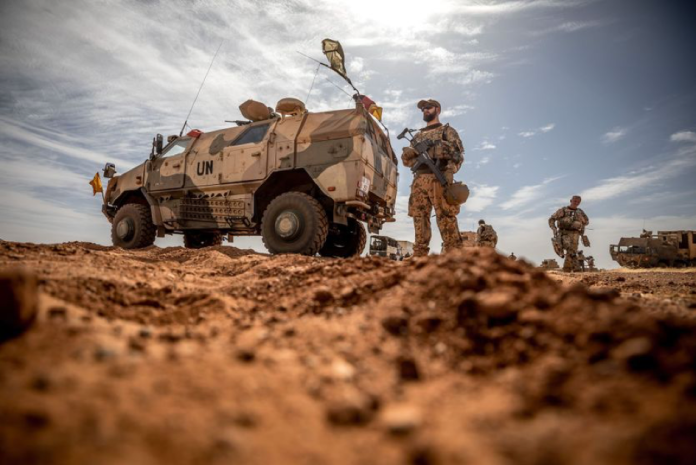
The author states that for over a decade, they worked to restore security, stability, and economic prosperity in Mali, alongside efforts to combat poverty. This full work spanned more than ten years, involving a delicate balance of quiet diplomacy and strong hard security operations, extending from the negotiating tables of Ecowas to the challenging field posts across the Sahel. The author’s commitment to Mali during this period was an investment in peace, in its people, and in a future where a child in Kidal could dream of coding rather than combat.
A multilateral security architecture was instrumental in these efforts, placing personnel in areas previously controlled by bandits, effectively opening roads for grain transportation, and enabling mayors to regain control of their town halls and children to return to their classrooms. This architecture was not just about military presence; it was about creating a foundation for normalcy and progress. The presence of this multilateral force provided key legitimacy, which in turn attracted investors and safeguarded convoys, fostering an environment conducive to economic recovery and social stability.
Partnerships with Ecowas, the AU, the UN, and various bilateral allies were described as providing scaffolding for Mali as it rebuilt its institutions, much like a house under construction needs support to stand firm. These alliances were vital in providing the necessary framework and resources for the nation's recovery. The tangible benefits of these efforts were numerous and impactful. When the Niger River corridor was secured, for instance, rice yields doubled within just two seasons, directly improving food security and economic prospects for farmers. When community police received specialized training in Timbuktu, there was a resurgence of interest in tourism, signaling a return of confidence and a potential boost to the local economy. The de-risking of cross-border trade was another significant achievement, allowing trucks to resume their vital routes to Dakar and Abidjan, reconnecting Mali to regional markets and facilitating commerce. The author considers the decade dedicated to this cause as an investment in peace, people, and a future where a child in Kidal could dream of coding rather than combat, noting the profound, long-term vision behind these efforts.
The Junta's Destructive Isolationism
The security arrangement provided by the international multilateral force yielded greater positive impact than the junta’s current isolationist, anti-multilateral, and bellicose approach, according to the author. The author expressed deep concern regarding the country's armament developments and sorrow for the killings of individuals such as General Sadio Camara, the defense minister, if accounts of his demise are accurate. The author is heartsick about the armament development, seeing it as a dangerous and counterproductive path. The sorrow expressed for the killings of individuals like General Sadio Camara, the defense minister, is palpable, especially if the accounts of his demise prove true, showing the tragic human cost of the current trajectory.
The current state of poverty in Mali is illustrated by stark images, such as a boy drinking from a cattle trough because the well had been bombed, or a widow selling her last goat to pay a smuggler. These vivid descriptions paint a grim picture of the daily struggles faced by ordinary Malians under the current regime. The author argues that the junta’s posture has not strengthened Mali’s sovereignty but has instead softened the lives of Malians, leading to closed borders, escalating prices for goods, and an increase in young people resorting to armed groups due to a scarcity of employment opportunities. This approach, far from hardening the nation's position, has inadvertently made the lives of its citizens more precarious and vulnerable.
Should General Sadio Camara have indeed fallen, Mali would have lost more than just a defense minister; it would have lost a significant portion of its institutional memory, a chapter of its history and expertise that is irreplaceable. This potential loss shows the deeper, systemic damage inflicted by the ongoing instability. The author concludes that Mali's salvation will not come through the acquisition of more weapons, but rather through the courage to cease hostilities and lay down arms, advocating for a path of peace over perpetual conflict. Mali, the author insists, will not be saved by more guns, but by the courage to lay them down, emphasizing that true strength lies in de-escalation and reconciliation.
The Imperative to Relinquish Power
The supreme interest of Mali is the survival of millions, not the tenure of a few individuals in military fatigues, according to the author. Power seized without the consent of the populace cannot resolve issues that arose from consent being denied. This fundamental principle notes the illegitimacy of the junta's rule and its inherent inability to address the nation's deep-seated problems effectively. The author asserts that the barracks should revert to their constitutional role, which is the defense of the nation, rather than defining the nation itself. This distinction is key, arguing that the military's purpose is to protect the state, not to govern it.
Nations do not thrive under a siege mentality, the author states, noting that fewer partners inevitably lead to fewer markets, fewer vaccines, and fewer future opportunities. This isolationist approach, characterized by a defensive and hostile stance towards external engagement, ultimately harms the very people it claims to protect. Bellicosity, it is argued, contributes to graveyards, not to the filling of granaries, a poignant metaphor illustrating that aggression and conflict lead to death and scarcity, not prosperity. The current situation in the Sahel is described as the world's 1945 moment, indicating a critical juncture requiring significant intervention and a fundamental shift in approach. This comparison shows the gravity of the crisis, evoking a time of profound global upheaval and the necessity for transformative change. The region requires predictable, principled engagement that extends beyond the duration of news cycles, according to the analysis, emphasizing the need for sustained and consistent international support rather than fleeting attention. The author's call for the junta to relinquish power is not presented as a defeat, but as a duty, a moral and strategic imperative for the sake of Mali's future. The author also argues that power seized without consent cannot solve problems created by consent denied, directly challenging the legitimacy and effectiveness of the junta's rule. Ultimately, the author believes that in stepping down, the junta has the opportunity to step into history as the soldiers who chose country over command, a legacy of patriotism rather than self-interest.