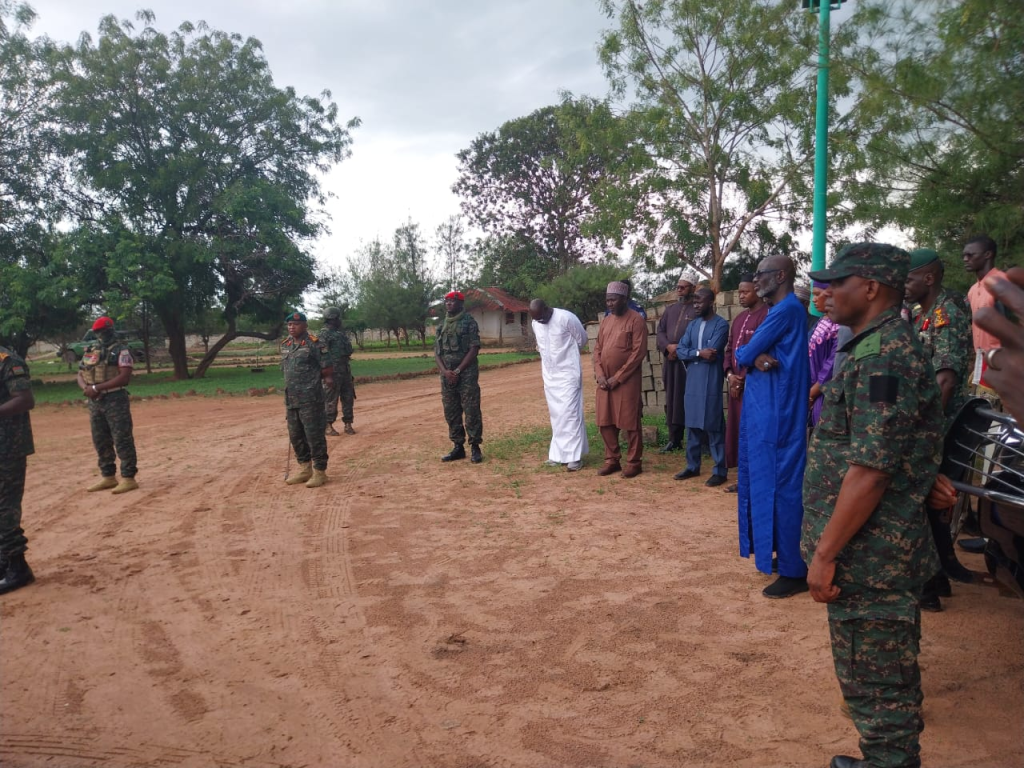
Videos circulating on social media appear to show Senegalese security personnel engaged in demolition activities at the Bulock military location in The Gambia. The visual evidence, widely disseminated across various platforms, has ignited significant public concern and raised serious questions regarding territorial integrity and international protocols. The incident, if confirmed, represents a direct challenge to the established sovereignty of The Gambia within its internationally recognized borders. This concerning development prompted an urgent call for immediate diplomatic engagement between The Gambia and Senegal. To address the gravity of the situation and uphold national sovereignty, the Government of The Gambia should engage immediately with the Government of Senegal through diplomatic channels. This proactive diplomatic approach is essential not only to establish the precise facts surrounding the event but also to prevent any recurrence of similar incidents that could destabilize bilateral relations and regional peace. The imperative for swift and transparent communication between the two nations cannot be overstated, as it forms the bedrock for de-escalation and resolution.
The Bulock Incident Unfolds
The Bulock military location has reportedly been occupied by the Gambia Armed Forces for many years, serving as a strategic point within The Gambia's territorial framework. This long-standing occupation shows the site's significance to Gambian national security and territorial claims. Despite recent tensions that have occasionally strained relations between neighboring states, diplomatic and legal paths have historically been used to resolve boundary disputes in Africa. These established mechanisms offer a proven framework for addressing complex territorial issues without resorting to unilateral actions or conflict. For instance, the exemplary case of Botswana and Namibia demonstrates the efficacy of such approaches; these two nations successfully resolved their border disagreements over Kasikili/Sedudu Island through a combination of sustained diplomacy and rigorous legal processes. This resolution noted a commitment to international law and peaceful coexistence.
Similarly, Ghana and Côte d’Ivoire successfully settled their maritime boundary dispute by referring the matter to the International Tribunal for the Law of the Sea, ultimately reaching a definitive and mutually respected resolution. This instance shows the role of international judicial bodies in providing impartial arbitration for complex boundary definitions. In another notable case, Nigeria and Cameroon implemented the International Court of Justice's judgment regarding the Bakassi Peninsula through sustained diplomatic engagement between the two nations, ensuring a peaceful resolution to their territorial claims despite initial disagreements. These instances collectively demonstrate compelling precedents for addressing complex sovereignty issues through established international mechanisms and bilateral discussions, emphasizing that a path to peaceful resolution is always available, even in the face of contentious claims. The Bulock incident, therefore, calls for a similar commitment to these time-honored principles of international relations and dispute resolution.
Pathways to Resolution
In light of the Bulock incident, transparency and public trust are critical. The Government of The Gambia should provide its public with a full factual briefing regarding the Bulock incident. This briefing must be thorough, accurate, and timely, ensuring that citizens are fully informed about the situation directly from official sources, thereby countering potential misinformation. Additionally, to facilitate direct communication and collaborative problem-solving, the Gambian government is advised to request an urgent meeting of the Gambia–Senegal Joint Commission. This high-level forum is ideally suited for addressing sensitive bilateral issues and fostering mutual understanding. This request should also explicitly include relevant military cooperation mechanisms, ensuring that security and defense officials from both nations are actively involved in discussions and solutions. Such inclusion is critical for addressing the military dimension of the incident and preventing future escalations.
A joint technical assessment of the affected area is also recommended as a key step towards establishing an objective understanding of the situation on the ground. This assessment should involve a multidisciplinary team comprising border experts, experienced surveyors, and senior defence officials from both The Gambia and Senegal. The primary objective of such a joint effort is to establish a common understanding of the facts on the ground, including the precise location of the demolition activities, the historical demarcation of the border in that specific area, and any existing agreements pertaining to military installations. This collaborative approach can help to de-escalate tensions by replacing speculation with verified data.
Should diplomatic engagement, including the Joint Commission meeting and the joint technical assessment, prove insufficient in resolving the matter to the satisfaction of both parties, the Government of The Gambia has the option to consider appropriate regional or international dispute-resolution mechanisms. This step would follow if bilateral discussions do not yield a satisfactory outcome, providing an avenue for impartial arbitration or mediation through established international bodies. Such mechanisms could include recourse to organizations like the Economic Community of West African States (ECOWAS) or, if deemed necessary, international judicial bodies, aligning with the precedents set by other African nations in resolving their territorial disputes.
Strengthening Future Security
The restraint demonstrated by the Gambia Armed Forces following the Bulock incident should be recognized as a significant contribution to regional peace and stability. Their measured response in the face of a provocative situation shows a commitment to de-escalation and adherence to diplomatic protocols, which is vital for maintaining good neighborly relations. Moving forward, the Government of The Gambia is advised to strengthen its border governance framework comprehensively. This involves implementing improved surveillance technologies, such as drone patrols and advanced sensor networks, to monitor border activities more effectively and provide real-time intelligence. Establishing clear joint patrol protocols with neighboring countries, particularly Senegal, can foster greater cooperation, build trust, and ensure coordinated responses to cross-border issues. Developing strong early-warning mechanisms is also key to prevent future incursions or disputes from escalating, allowing for timely diplomatic intervention.
The Government of The Gambia should enhance its strategic communication capabilities. This improvement is key to ensure that citizens receive accurate and timely information directly from official sources, thereby reducing reliance on potentially misleading or unverified content circulating on social media platforms. By proactively managing the narrative and providing transparent updates, the government can maintain public trust and effectively manage public sentiment during sensitive situations, preventing the spread of rumors or disinformation that could exacerbate tensions. This also includes developing clear channels for public inquiries and feedback regarding border security.
Finally, a full review of security arrangements is recommended for all sensitive border installations currently occupied by the Gambia Armed Forces. This review should be thorough and systematic, assessing existing protocols, the adequacy of current infrastructure, and the effectiveness of personnel deployment across all critical border points. The objective is to identify and address any vulnerabilities that could be exploited, ensuring the long-term security and integrity of The Gambia's territorial boundaries. This proactive measure will not only bolster national defense but also reassure the Gambian populace of their government's commitment to protecting national sovereignty.