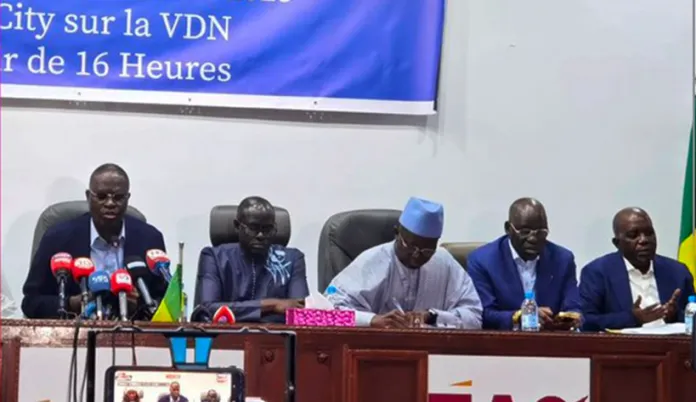
The National Water and Electricity Company (Nawec) is addressing recent speculation regarding its financial obligations, particularly claims that it owes Senegal’s electricity utility, Senelec, as much as US$88.5 million. This figure has been a point of discussion, prompting the Gambian utility to clarify its debt figures as part of a broader discussion on its financial standing and future plans for energy independence. Nawec stated that its total liabilities to Senelec and Guinea's Électricité de Guinée (EDG) collectively amount to approximately US$58 million, a figure significantly lower than some of the circulating reports. This clarification aims to provide transparency and reassure stakeholders about the company’s financial health.
Debt Clarification and Payment Strategy
Official sources indicate that the National Water and Electricity Company's (Nawec) outstanding obligation to Senelec currently stands at approximately US$37 million. This figure clarifies a significant portion of the utility's broader debt portfolio and addresses the specific claims about its liabilities to the Senegalese power provider. Nawec is accelerating its payments to both Senelec and Guinea's Électricité de Guinée (EDG). This proactive approach demonstrates the company's commitment to resolving its financial commitments promptly. The company aims to settle these debts while simultaneously ensuring it can meet its ongoing operational obligations, a critical balance for maintaining service delivery. This strategy is part of Nawec's broader commitment to achieving financial stability and ensuring reliable service delivery across The Gambia. The accelerated payment plan is specifically intended to strengthen relationships with regional partners, fostering trust and cooperation, and to improve the company's fiscal health moving forward, paving the way for future investments and growth.
Future Generation and Renewable Investments
Nawec is also focusing intensely on future generation capacity and renewable energy initiatives, particularly following the expiration of its contract with Turkish power producer Karpowership in 2025. The company's strategy involves a rapid increase in domestic generation capacity, aiming to reach approximately 70 megawatts. This ambitious expansion is designed to significantly enhance The Gambia's energy independence, reducing reliance on external power sources and bolstering national energy security. A significant component of this strategy is a planned renewable energy investment: the 150-megawatt Soma solar project. This large-scale solar facility represents a cornerstone of Nawec's commitment to diversifying its energy mix, moving towards sustainable sources, and reducing the country's carbon footprint. The Soma solar project is expected to play a key role in meeting the nation's growing energy demands through clean energy.
Financial Health and External Support
Beyond its obligations to Senelec, an additional US$21 million is owed to Guinea’s state electricity provider, Électricité de Guinée (EDG), supplementing Nawec’s liabilities to regional partners. Nawec's financial flexibility has reportedly improved following the full liquidation of an International Islamic Trade Finance Corporation (ITFC) facility. This development marks a significant step in strengthening the company's financial position, freeing up resources and enhancing its capacity to manage other debts and investments. Discussions are currently underway regarding potential additional support from the World Bank. This engagement could provide further financial backing for Nawec's operational and developmental initiatives, including the ambitious renewable energy projects. These efforts are part of Nawec's broader strategy to enhance its financial health, secure its energy future, and ensure a stable and sustainable power supply for all Gambians. The combined approach of debt management, domestic capacity building, and international financial partnerships shows Nawec's full plan for long-term sustainability.