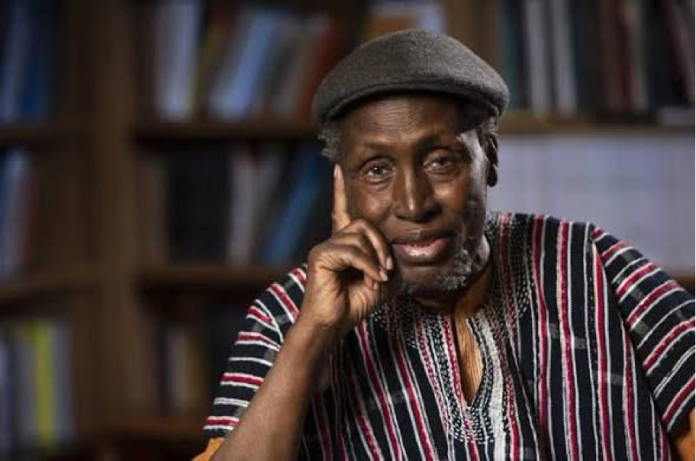
Ngũgĩ wa Thiong’o, the internationally acclaimed Kenyan author and scholar, died on May 28, 2025, in Buford, Georgia, at the age of eighty-seven. His passing prompted reflections on his life, marked by both literary triumph and personal tribulation. Ngũgĩ wa Thiong’o, a towering figure in African literature, dedicated his life to advocating for indigenous languages and decolonizing minds through his powerful storytelling and critical essays. His extensive body of work, spanning decades, explored themes of colonialism, independence, and the struggle for cultural identity in post-colonial Kenya. Throughout his career, he faced significant challenges, including political persecution and exile, which profoundly shaped his artistic output and personal philosophy. Ngũgĩ wa Thiong’o once described his experiences, stating, "They did all sorts of acts of humiliation, including burning my face with cigarettes, then they tried to rape my wife Njeeri." This harrowing account showed the personal cost of his unwavering commitment to his ideals. Despite never receiving the Nobel Prize in Literature, an accolade many believed he deserved, Ngũgĩ wa Thiong’o considered the affection of his readers "the Nobel of the heart." This sentiment reflected his deep connection with his audience and his belief that genuine impact transcended institutional recognition.
A Life of Literary and Political Struggle
Ngũgĩ wa Thiong’o, originally named James Ngugi, was born in 1938 in Kamiriithu, a location near Limuru. His early life was shaped by the anti-colonial struggle in Kenya, an experience that would later infuse much of his literary work with a profound sense of historical consciousness and political critique. He emerged as a prominent voice in African literature during the post-independence era, challenging the lingering effects of colonialism and advocating for cultural liberation. His early literary career saw the publication of significant works including 'Weep Not, Child' in 1964, a poignant novel exploring the Mau Mau Uprising and its impact on a young boy's life. This was followed by 'The River Between' in 1965, which delved into the clash between traditional Gikuyu culture and Christian missionary influence. His seminal work, 'A Grain of Wheat' in 1967, offered a complex narrative of betrayal and redemption set against the backdrop of Kenya's struggle for independence. These early novels established Ngũgĩ wa Thiong’o as a formidable literary talent with a keen eye for social and political commentary.
A key moment in his life occurred on November 27, 1977, when the Kenyan authorities banned his play 'Ngaahika Ndeenda' (I Will Marry When I Want). This play, co-written with Ngũgĩ wa Mirii and performed by villagers at the Kamiriithu Community Educational and Cultural Centre, was a powerful critique of social injustices and neo-colonialism. The banning of the play marked the beginning of a period of intense state repression against Ngũgĩ wa Thiong’o. This event precipitated a lengthy period of exile, as Ngũgĩ left Kenya in 1982, unable to safely return to his home country due to the political climate. His departure initiated a long and challenging chapter of his life, during which he continued to write and advocate from abroad. During his time away, Kenyan authorities even issued an arrest warrant for the fictional protagonist of his novel 'Matigari', a testament to the perceived threat his literary output posed to the government. This extraordinary action showed the deep political sensitivity surrounding his work and the lengths to which the authorities would go to suppress dissent, even in fictional forms. After more than two decades, Ngũgĩ returned to Kenya in 2004, under the presidency of Mwai Kibaki, marking a significant, albeit cautiously optimistic, moment in his personal and national narrative.
Persecution and Exile's Scars
In 1977, Ngũgĩ wa Thiong’o played a significant role in establishing the Kamiriithu Community Educational and Cultural Centre. This initiative aimed to foster local arts and education, empowering rural communities through cultural expression and critical engagement. The center became a vibrant hub for community theatre, where plays were performed in Gikuyu, Ngũgĩ wa Thiong’o's mother tongue, making art accessible to a wider audience and celebrating indigenous languages. However, its success and the politically charged nature of its theatrical productions, particularly 'Ngaahika Ndeenda', made it a target for the authorities. The same year, Kenyan authorities took decisive action against Ngũgĩ. He was arrested at his home in December 1977, under a detention order signed by then-Vice President Daniel arap Moi. This arrest was a direct consequence of his involvement with the Kamiriithu Centre and his commitment to using art as a tool for social commentary and political awakening.
Following his arrest, Ngũgĩ was held in Kamiti Maximum Security Prison, one of Kenya's most notorious correctional facilities. He remained incarcerated for almost a year without being formally charged or undergoing a trial, a clear violation of basic human rights. His detention noted the government's severe response to dissent and cultural expression, aiming to silence critical voices and suppress alternative narratives. The circumstances of his imprisonment were a direct consequence of his artistic and political activities, particularly his involvement with the Kamiriithu Centre and his critique of the existing power structures. During his time in prison, Ngũgĩ wa Thiong’o made the key decision to abandon writing in English and commit to writing exclusively in Gikuyu, a choice he detailed in his influential work 'Decolonising the Mind'. This period of arbitrary detention deeply affected Ngũgĩ wa Thiong’o, influencing his later works and his subsequent decision to live in exile, a decision made for his safety and continued freedom of expression.
The Mirage of Recognition
Amnesty International designated Ngũgĩ wa Thiong’o a prisoner of conscience during his detention, noting international concern for his plight and bringing global attention to the human rights situation in Kenya. This designation showed the injustice of his imprisonment and galvanized international support for his release. He continued his literary work from exile, demonstrating an unyielding spirit and commitment to his craft despite the geographical separation from his homeland. The book 'Matigari' was published in 1986, a powerful allegorical novel that further solidified his reputation as a fearless critic of oppression. The novel, originally written in Gikuyu, depicted a hero who emerges from the forest after fighting for freedom, seeking truth and justice in a newly independent nation. Its publication occurred while Ngũgĩ wa Thiong’o remained outside Kenya, unable to return due to political circumstances, making the novel's themes of seeking justice in a post-colonial state even more resonant.
Despite his global recognition and numerous accolades throughout his career, Ngũgĩ wa Thiong’o never received the Nobel Prize in Literature. Year after year, his name was among the most speculated contenders, yet the prestigious award eluded him. The article describes the Nobel Prize as a "mirage manufactured in the laboratories of imperial thought." This characterization reflects a critical perspective on Western-centric literary awards, suggesting they do not always align with the values or experiences of writers from other regions, particularly those who write in indigenous languages. Ngũgĩ wa Thiong’o himself often critiqued the dominance of European languages in global literature, arguing for the importance of African languages as vehicles for authentic cultural expression and intellectual thought. His perspective challenged the notion that literary merit could be universally judged through a singular, often Western, lens, advocating instead for a more inclusive and diverse understanding of literary excellence.
A Final, Painful Farewell
Ngũgĩ wa Thiong’o’s family announced on June 1, 2025, that he had requested no prescribed burial, desiring instead to be remembered "through the ideals he stood for and the lives he touched." This final wish showed his lifelong commitment to principles over personal veneration and reflected a profound humility despite his immense stature. It was a request that resonated deeply with his readers and admirers, who recognized his legacy not just in his books, but in his unwavering advocacy for justice, language, and cultural identity. This final wish followed a life marked by both literary achievement and profound personal hardship, including a particularly traumatic event on August 12, 2004. On that day, four armed men attacked Ngũgĩ wa Thiong’o and his wife, Njeeri, in their Nairobi apartment, an incident that shocked the world and noted the continued dangers faced by outspoken critics in Kenya. Ngũgĩ recounted the incident, stating, "They did all sorts of acts of humiliation, including burning my face with cigarettes, then they tried to rape my wife Njeeri." This brutal assault, which occurred shortly after his return to Kenya from exile, served as a stark reminder of the violence and intimidation that continued to plague the nation. In his later years, Ngũgĩ wa Thiong’o suffered from kidney disease, which necessitated regular dialysis treatments, adding another layer of personal struggle to his remarkable life. Despite these health challenges, he continued to write and engage with intellectual discourse, demonstrating an enduring resilience until his passing. His legacy will undoubtedly continue to inspire generations of writers, activists, and thinkers worldwide.