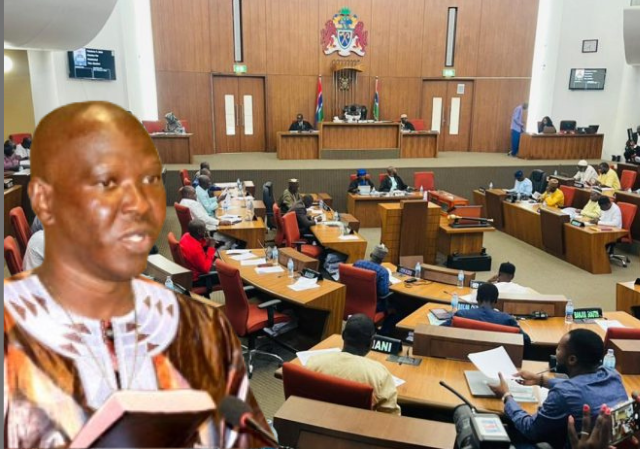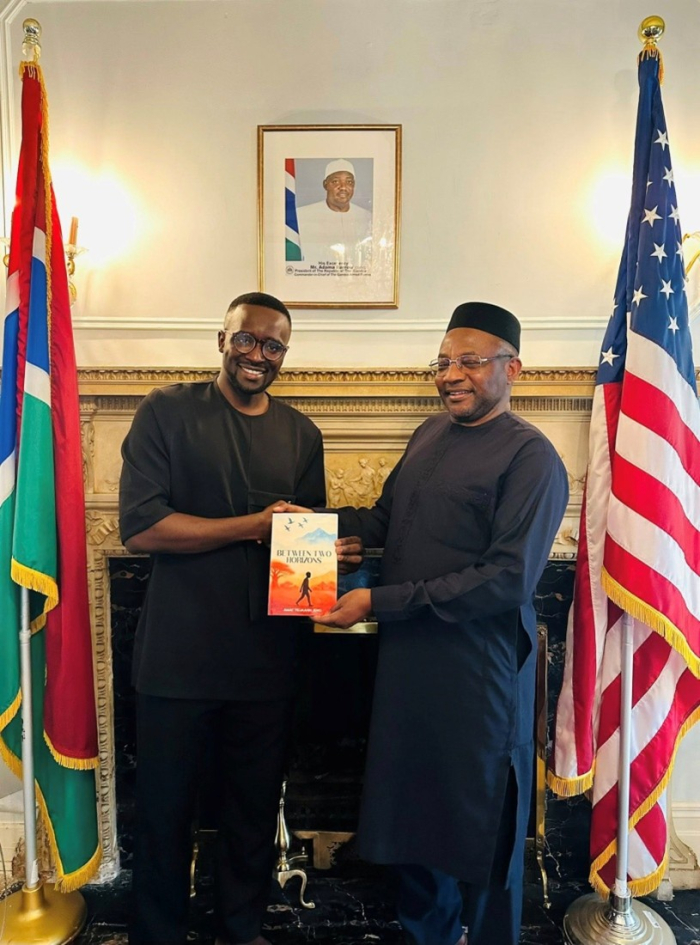
Mai Ahmad Fatty, National Coordinator of the NPP-Grand Alliance, recently defended Health Minister Dr. Ahmadou Lamin Samateh following Dr. Samateh's public admission of a data error in a maternal mortality figure presented to the National Assembly. This public acknowledgment by Dr. Samateh prompted a swift defense from Fatty, who stated, "There is a peculiar sickness in our political culture: we demand truth from our leaders and then punish them the moment they give it to us." He further remarked, "A minister who corrects the record voluntarily is not one with something to hide, but one discharging the essence of ministerial responsibility." Fatty warned against discouraging such honesty, adding, "If disclosure is weaponised and silence interpreted as guilt, then no official will admit an error again, and public accountability will suffer." He concluded by saying, "We commend Dr. Samateh for his candour."
Minister's Candor Praised
Mai Ahmad Fatty commended Health Minister Dr. Ahmadou Lamin Samateh for his candor, stating that the minister demonstrated accountability and transparency by acknowledging the data error. Fatty emphasized that Dr. Samateh personally verified the correct figures and ensured that those responsible for the initial inaccuracy were held accountable. This proactive approach, according to Fatty, showed the minister's commitment to his duties. The National Coordinator of the NPP-Grand Alliance argued that the minister’s actions exemplify the standard of leadership and responsibility expected within a democratic system. Fatty asserted, "A minister who corrects the record voluntarily is not one with something to hide, but one discharging the essence of ministerial responsibility." He stressed that Dr. Samateh's willingness to openly address the mistake, rather than attempt to conceal it, sets a key precedent for public officials.
Fatty called upon political actors and civil society to differentiate between deliberate misconduct and human error in their assessments of officials. He noted that while deliberate wrongdoing must be condemned, honest mistakes, particularly when promptly corrected, should be viewed through a different lens. Fatty urged that honesty in governance should be encouraged rather than penalized, noting the importance of fostering an environment where leaders feel able to admit mistakes without fear of undue retribution. He reiterated his commendation for Dr. Samateh's candor, viewing it as a testament to the minister's integrity and dedication to public service.
Warning Against 'Punishing Honesty'
Mai Ahmad Fatty described the backlash against Dr. Ahmadou Lamin Samateh, the Health Minister, as a dangerous “punishment of honesty.” Fatty, the National Coordinator of the NPP-Grand Alliance, warned that such reactions risk undermining openness in public service. He stressed that errors are an inevitable part of governance, arguing that expecting perfection from public officials is unrealistic and counterproductive. Fatty criticized sections of the opposition and civil society, accusing them of creating “governance by entrapment.” He contended that these groups attempt to manipulate situations where officials admit mistakes into political controversies, thereby discouraging future transparency.
Fatty further warned that if disclosure is weaponized and silence interpreted as guilt, no official will admit an error again, and public accountability will suffer. He accused critics of attempting to manufacture controversy from what he termed an honest correction by the Health Minister. Fatty cautioned that a society that punishes truth risks creating a culture where transparency is replaced by concealment, ultimately harming the public interest. He emphasized the importance of distinguishing between genuine malfeasance and human error to foster a climate where officials feel comfortable acknowledging and rectifying mistakes without fear of undue political reprisal. This distinction, he argued, is vital for maintaining a healthy and accountable democratic system.
Broader Context of Transparency
Mai Ahmad Fatty pointed to the Barrow administration’s record as evidence of a commitment to transparency. The National Coordinator of the NPP-Grand Alliance cited the consistent parliamentary scrutiny faced by government officials as a key component of this openness. He elaborated that ministers and other public servants are regularly called to account before the National Assembly, providing a strong mechanism for oversight. Fatty also noted the prevailing press freedom within the country, indicating that media outlets operate without undue restrictions, which he suggested contributes to a more informed public discourse. This environment, he noted, allows for critical reporting and public examination of government actions.
He further referenced an evolving culture of institutional correction within the government, implying that mechanisms are in place for identifying and rectifying errors. This culture, according to Fatty, encourages officials to address inaccuracies rather than ignore them, as demonstrated by Dr. Samateh's actions. Fatty's comments aimed to frame the Health Minister's admission within a broader governmental push towards accountability and public candor. He suggested that such actions are consistent with the administration's overall approach to governance, which he described as increasingly transparent. By connecting the minister's candor to these wider governmental efforts, Fatty sought to reinforce the idea that Dr. Samateh's actions were not isolated but reflective of a systemic commitment to openness.