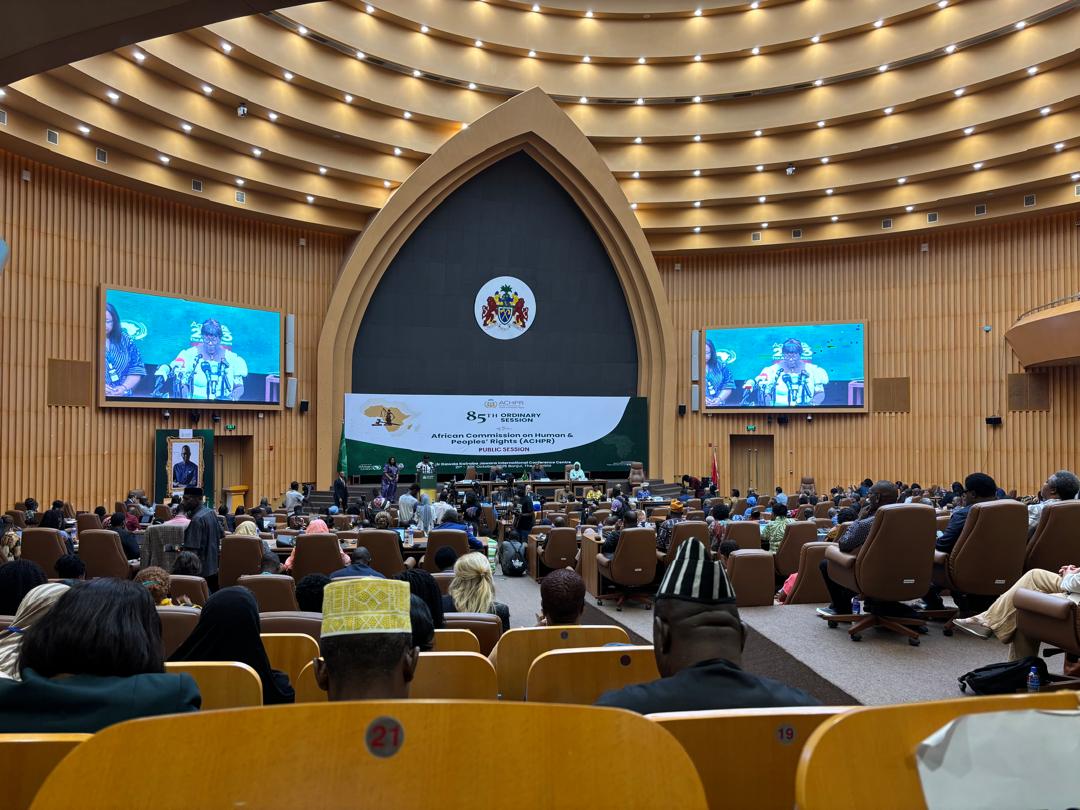
The 87th Ordinary Session of the African Commission on Human and Peoples’ Rights is underway in Banjul, The Gambia. This significant gathering brings together various stakeholders to discuss critical human rights issues across the continent. During the session, the Strategic Initiative for Women in the Horn of Africa (SIHA Network) noted widespread human rights abuses against women and girls, drawing urgent attention to the deteriorating situation in several countries. SIHA Network operates as an indigenous feminist and women’s rights organization, established in 1995. The organization brings together more than 250 civil society organizations, forming a powerful collective voice for gender justice. These member organizations are dedicated to advancing gender justice across several countries in the Greater Horn of Africa, including Uganda, Sudan, South Sudan, Ethiopia, Djibouti, and the Somali region. The network's participation in the African Commission session shows its ongoing efforts to address human rights concerns affecting women and girls throughout its operational areas, advocating for accountability and systemic change.
Escalating Crises in the Greater Horn of Africa
Areas in Sudan, including El Fasher in North Darfur and Kadugli in South Kordofan, have been officially declared as famine-stricken, according to the Strategic Initiative for Women in the Horn of Africa (SIHA Network). This declaration shows the severe humanitarian crisis unfolding in the region, where millions are facing acute food shortages. The ongoing conflicts and instability have significantly disrupted food supply chains and displaced large populations, exacerbating food insecurity for vulnerable communities. The dire conditions in these areas highlight the urgent need for humanitarian intervention and peace efforts to mitigate the widespread suffering, which disproportionately affects women and children.
In Somalia, over 6 million people are currently facing acute hunger. This severe food insecurity is primarily attributed to a combination of persistent lack of rainfall and ongoing unrest across the country. The prolonged drought conditions have devastated agricultural livelihoods and livestock, which form the backbone of many Somali communities. Coupled with internal conflicts, these factors have led to widespread displacement and hindered access to humanitarian aid, further deepening the crisis for millions of individuals and families. The humanitarian situation demands immediate and sustained international attention to prevent further loss of life and alleviate suffering.
SIHA Network also continues to receive reports of child marriage in Somalia, involving children as young as 8 years old. These alarming reports indicate a concerning trend where young girls are forced into marriage, often due to economic hardship, cultural practices, and a lack of protective mechanisms within communities. The practice of child marriage has severe implications for the health, education, and overall well-being of the girls affected, exposing them to early pregnancies, violence, and limited opportunities for personal development and future autonomy. SIHA's documentation of these cases notes the urgent need for strengthened child protection measures and advocacy against such harmful practices, calling for strong legal frameworks and community engagement to safeguard young girls.
The African Union (AU) has designated "Assuring Sustainable Water Availability and Safe Sanitation Systems to Achieve the Goals of Agenda 2063" as its theme for the year. This theme reflects the AU's commitment to addressing critical challenges related to water and sanitation across the continent, recognizing their fundamental importance for human dignity and development. SIHA Network suggests that inadequate access to clean water and sanitation disproportionately affects women and girls, who often bear the primary responsibility for water collection, a task that can be time-consuming and dangerous. They are more vulnerable to waterborne diseases and gender-based violence when accessing facilities that lack privacy or security. The AU's focus on this theme is expected to foster initiatives aimed at improving infrastructure and ensuring equitable access to these essential services, which SIHA believes must include a gender-sensitive approach.
In Sudan, legal representation provided by SIHA Network has led to significant positive outcomes for women facing severe legal challenges. As a direct result of SIHA's efforts, 7 women have been acquitted due to insufficient evidence in their cases, demonstrating the impact of dedicated legal support. 13 women who had received death sentences have had these sentences overturned on appeal, a testament to the network's commitment to justice and human rights. These legal victories show the vital role of organizations like SIHA in ensuring due process and challenging injustices within the judicial system, particularly in contexts where women's rights are often curtailed or overlooked. The network's work provides critical support to women navigating complex legal frameworks and facing severe penalties, offering a lifeline in dire circumstances.
Systematic Violations and Abuses Documented
In Ethiopia, the overall rate of Gender-Based Violence (GBV) stands at 51%, according to documentation by the Strategic Initiative for Women in the Horn of Africa (SIHA Network). This alarming statistic reveals the widespread nature of violence against women and girls in the country, affecting more than half of the female population. The organization further documented over 1,294 cases of conflict-related sexual violence (CRSV) in Sudan between 2023 and 2025, with 77% of these cases specifically identified as rape. These numbers paint a grim picture of the widespread use of sexual violence as a weapon of war and control. In Darfur, the Rapid Support Forces (RSF) have deliberately targeted women and girls from the Fur, Masalit, Berti, Zaghawa, and Tunjur communities based on their ethnicity, indicating a clear pattern of ethnically motivated violence. Thousands of women and girls have been held by the RSF in converted detention centers located in the villages of Garny, Tura, and Tabit, all within North Darfur, where they are subjected to horrific conditions and abuses.
Conversely, the Sudan Armed Forces (SAF) have detained over 840 women in various locations across Sudan, including Wad Madani (Al Gezira), Khartoum, Gedaref, Port Sudan, Dilling, Kadugli, and El Obeid. These detentions often occur without due process, noting concerns about arbitrary arrests and the targeting of women perceived as opponents or activists. In South Sudan, reports indicate that at least two women or girls experience sexual violence daily in Western Bahr El Ghazal alone, showing the constant threat of violence in post-conflict settings and the urgent need for protection mechanisms. SIHA Network also notes the high prevalence of Female Genital Mutilation (FGM) in Somalia, where the rate is over 99% among women aged 15 to 49, making it one of the highest in the world and a severe violation of human rights. In Ethiopia, FGM statistics show a prevalence rate of 65%, indicating that millions of women and girls continue to suffer from this harmful traditional practice.
SIHA Network also reported on the arbitrary detention of Ms. Sadia Moalim Ali, a tuk-tuk driver and social activist, in Somalia. Ms. Ali has been detained since April 12, 2026, for her online activism and participation in peaceful demonstrations, a clear suppression of freedom of expression and assembly. In Sudan, SIHA Network’s advocacy efforts led to an official government directive that resulted in the release of 402 women who had been arbitrarily detained on various charges, demonstrating the power of persistent human rights advocacy. These documented cases collectively show the widespread human rights abuses and systematic violations faced by women and girls across the Horn of Africa, ranging from conflict-related violence and harmful traditional practices to arbitrary detention and suppression of dissent.
Calls for Accountability and Action
The Strategic Initiative for Women in the Horn of Africa (SIHA Network) has urged the African Commission on Human and Peoples’ Rights (ACHPR) to hold Member States of the Greater Horn of Africa (GHoA) accountable for their obligations under the African Charter on Human and Peoples’ Rights, specifically Articles 5 (prohibition of torture and cruel, inhuman or degrading punishment), 16 (right to enjoy the best attainable state of physical and mental health), 17 (right to education), and 18(3) (protection of women's rights), and the Maputo Protocol. These legal instruments provide a strong framework for protecting women's rights, and SIHA insists on their full implementation. The organization recommended the ACHPR call for an immediate cessation of hostilities and the targeting of civilians in all active conflict zones across the GHoA, emphasizing the urgent need to protect non-combatants. SIHA Network also advised the ACHPR to demand that Member States in the GHoA immediately cease arms transfers that risk being used to commit atrocities, recognizing the link between arms proliferation and human rights abuses. The network further called for the ACHPR to strongly condemn and push Member States to actively combat all crimes of sexual and gender-based violence (SGBV) and conflict-related sexual violence (CRSV), advocating for full strategies to prevent these crimes and support survivors. In its recommendations, SIHA Network emphasized the need for the ACHPR to strongly condemn the harassment and intimidation of women human rights defenders (WHRDs), frontline responders, survivor networks, and women-led grassroots organizations, recognizing their key role in documenting abuses and providing support. The organization also demanded justice and accountability against the perpetrators of these crimes, calling for an end to ongoing immunity, including for those within the chain of command, to ensure that those responsible for grave violations are brought to justice. These full recommendations aim to foster a more protective and just environment for women and girls throughout the Greater Horn of Africa.