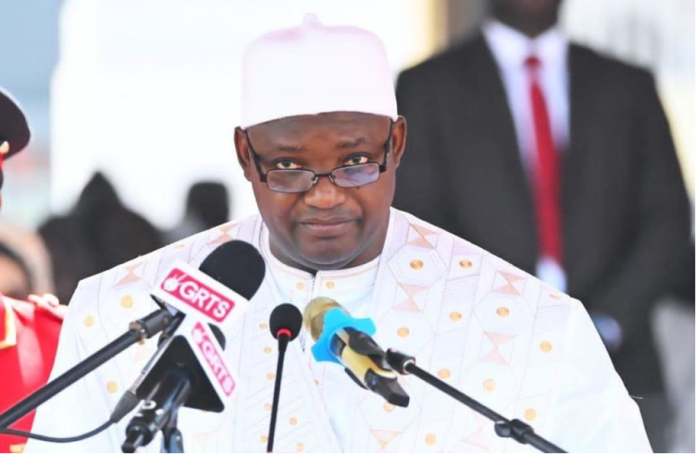
The Gambia has not developed the strategic profile needed for regional leadership under President Adama Barrow, nearly a decade into his administration, despite regaining international goodwill after its 2017 democratic transition. This goodwill, a valuable diplomatic asset, stems directly from the nation's successful and widely lauded democratic transition in 2017, which marked a significant departure from previous authoritarian rule. Leadership at the sub-regional and continental levels is earned, not attained by chance or ceremony, according to a "Dear Editor" submission. The submission states, "Leadership at the sub-regional and continental levels is not attained by chance or ceremony. It is earned through a consistent demonstration of vision, competence, diplomatic influence, and the confidence of fellow member states." It is difficult to argue that The Gambia has developed the necessary strategic profile to assume such leadership, the "Dear Editor" piece adds. "Nearly a decade into President Adama Barrow’s administration, it is difficult to argue that The Gambia has developed the strategic profile required to assume such leadership." This assessment suggests that despite the initial promise and international support, the nation's trajectory under the current leadership has not yet translated into the strong regional influence many had hoped for.
Foundations of Regional Leadership
Sustained influence within regional bodies like ECOWAS and the African Union requires purposeful governance, institutional strength, and a clear foreign policy agenda, according to observers. Purposeful governance implies a commitment to effective public administration, the rule of law, and a dedication to improving the lives of citizens, which in turn builds credibility on the international stage. Institutional strength refers to the robustness and independence of national institutions, including the judiciary, legislature, and civil service, ensuring stability and predictability in policy implementation. A clear foreign policy agenda, articulated and consistently pursued, provides a framework for diplomatic engagement, allowing other nations to understand and anticipate The Gambia's positions on critical regional and continental matters. Confidence in a country's leadership capacity is built through consistency, strategic planning, and demonstrable achievements that inspire trust among fellow member states.
The Gambia possesses enormous potential for regional leadership, enjoying political stability when compared with many of its neighbors. This internal stability provides a strong foundation from which to project influence externally, as it reassures potential partners of the nation's reliability. The nation also has a respected history of peaceful coexistence among its diverse populations, a model that could be replicated or shared within a region often grappling with inter-communal tensions. The Gambia commands international sympathy due to its successful democratic transition in 2017, which drew widespread praise and support from the global community. These foundational elements—political stability, social cohesion, and international goodwill—could provide a basis for an elevated regional role if leveraged strategically. However, the transformation of this potential into actual influence demands a proactive and well-defined approach to regional diplomacy and internal development.
Assessing The Gambia's Footprint
The country’s regional footprint remains modest, exhibiting little evidence of a deliberate strategy to shape policy discussions or drive initiatives addressing West Africa’s pressing political, economic, or security challenges. This contrasts sharply with the approach taken by some of its neighbors. For instance, Senegal, under President Bassirou Diomaye Faye, has projected itself as an increasingly influential actor within the sub-region, demonstrating a more assertive and strategic foreign policy. This proactive stance by Senegal notes the difference in regional engagement strategies and outcomes. The absence of a clear and consistent strategy from The Gambia means its participation in regional forums often appears reactive rather than initiative-driven, limiting its capacity to lead or significantly influence outcomes.
The hosting of the OIC Summit marked a historic diplomatic milestone for The Gambia, bringing international attention to the nation. This event was, without doubt, a significant achievement in terms of international visibility and logistical execution, showcasing the country's ability to host large-scale global gatherings. However, despite this significant event, many Gambians struggle to identify tangible outcomes that have emerged from the country’s tenure as OIC chair. The summit's impact on domestic policy or regional influence has not translated into widely recognized benefits for the populace. The lack of discernible follow-up or leveraging of this high-profile event for broader strategic gains raises questions about the long-term vision guiding The Gambia's international engagements. While such events can boost a nation's profile, their true value lies in how they are integrated into a larger strategic framework for national development and regional leadership.
Governance and Future Outlook
Until visionary statecraft, competent governance, and a coherent vision become defining features, The Gambia is likely to remain a participant rather than a leader in regional affairs. This assessment suggests that the nation’s current approach to regional engagement may not be sufficient to elevate its standing beyond that of a contributing member. For The Gambia to transition from a passive participant to an active leader within bodies like ECOWAS and the African Union, a fundamental shift in its internal administrative capabilities and strategic foresight is deemed necessary. This shift would involve not just policy changes but a deeper commitment to institutional reform and the cultivation of a strategic culture within its diplomatic and governmental apparatus.
The absence of consistently demonstrated visionary statecraft limits The Gambia’s ability to initiate and drive regional agendas. Visionary statecraft goes beyond day-to-day administration; it involves anticipating future challenges, identifying opportunities, and articulating a compelling future for the nation and its role in the region. Competent governance, encompassing efficient public administration, rule of law, and effective resource management, is also identified as a critical prerequisite for building trust and projecting influence among neighboring states. Without these elements, The Gambia may struggle to convince other member states of its capacity to lead complex regional initiatives or mediate disputes effectively. Neighboring countries look for stability, reliability, and demonstrable capability when considering which nations to follow or collaborate closely with on critical issues.
A coherent vision for its role in West Africa and the broader African continent is equally important, providing a clear roadmap for diplomatic efforts and policy contributions. This vision would articulate The Gambia's specific interests, values, and proposed solutions to regional challenges, thereby solidifying its identity as a thoughtful and proactive actor. Such a vision would guide its engagements in ECOWAS, the African Union, and other international forums, ensuring that its actions are aligned with its long-term strategic goals. It would also enable The Gambia to speak with a unified voice on regional issues, enhancing its credibility and impact. The current trajectory indicates that without these foundational changes—visionary statecraft, competent governance, and a clear, coherent vision—The Gambia will continue to primarily react to regional developments rather than shape them, maintaining its status as a participant rather than a front-runner in continental affairs. This means that despite its potential and the goodwill it has drew, the nation risks remaining on the sidelines of critical regional decision-making processes.