The Gambian government has condemned an incident that occurred on July 17, 2026, at the Bulock Military Camp in Foni, The Gambia, labeling the action as "profoundly provocative and totally unacceptable." Officials stated the action demonstrated "exemplary professionalism and restraint" by Gambian forces. The government's strong reaction shows growing tensions regarding security operations in the region, particularly concerning the presence and actions of foreign military contingents within Gambian territory. This recent event at the Bulock Military Camp in Foni has brought to the forefront long-standing concerns about national sovereignty and the operational autonomy of The Gambia's own security forces. The government's unequivocal condemnation notes a critical juncture in its relationship with external security partners, signaling a demand for greater respect for its territorial integrity and military installations.
ECOMIG's Long Shadow Over The Gambia
Senegalese soldiers have operated under the Ecowas Mission in The Gambia (ECOMIG) since 2017, maintaining a significant presence that has been a subject of ongoing debate. A fence, which had stood uncontested for 25 years, was recently removed in an incident that has drawn widespread criticism and raised serious questions about the mandate and conduct of ECOMIG forces. This fence's construction was funded by Gambian taxpayers, according to reports, further amplifying the sense of grievance and perceived disrespect for national assets. The continued presence of ECOMIG, particularly its Senegalese component, has become a focal point for discussions about The Gambia's path towards full security independence. While Nigerian and Ghanaian forces have rotated out of ECOMIG, Senegalese forces continue to constitute a substantial part of the mission, creating an imbalance in the composition of the multinational force. The scale of their ongoing deployment in The Gambia is significant; for instance, one Senegalese battalion reportedly comprised 745 personnel, showing the considerable foreign military footprint within the country. This enduring foreign military presence, predominantly Senegalese, has led to calls for a re-evaluation of the mission's necessity and its impact on Gambian sovereignty. The fact that Gambian taxpayers funded the construction of the demolished fence only deepens the public's concern and emphasizes the need for accountability and respect from all parties involved in the nation's security arrangements.
Provocation and Overreach
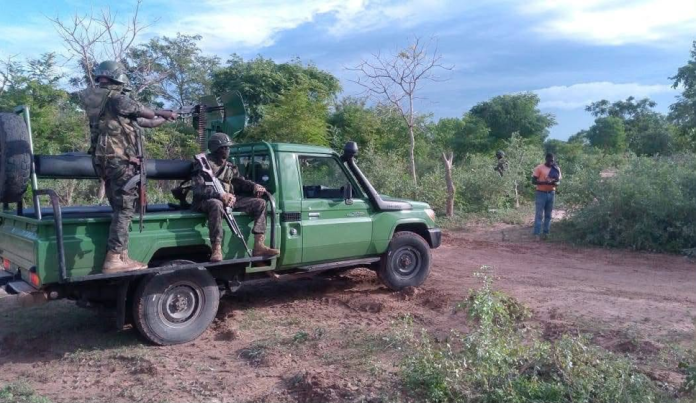
The incident at the Bulock Military Camp involved Senegalese soldiers entering a Gambian military installation and demolishing approximately 200 metres of a perimeter fence with a bulldozer. The Gambian government described the action as "profoundly provocative and totally unacceptable," a sentiment that reflects the seriousness with which such an encroachment on national military infrastructure is viewed. It also praised its troops for showing "exemplary professionalism and restraint" during the incident, acknowledging the potential for escalation had Gambian forces responded differently. This act of demolition within a sovereign military base is seen by many as a clear instance of overreach.
Indeed, Senegalese troops operating within The Gambia have been accused of repeatedly overstepping their mandate and have been involved in clashes that resulted in the deaths of Gambian citizens. These past incidents, coupled with the recent demolition at Bulock Military Camp, contribute to a growing narrative of foreign forces acting with impunity on Gambian soil. The repeated accusations of mandate overreach highlight a pattern of behavior that undermines public trust and challenges the notion of a supportive, rather than intrusive, external security presence. The tragic loss of Gambian lives in previous encounters involving Senegalese troops further complicates the relationship and fuels public demand for a reassessment of ECOMIG's role. Almameh Gibba, a lawmaker representing Foni Kansala, has consistently called for the removal of Ecowas Mission in The Gambia (ECOMIG) forces from the country, articulating a sentiment shared by a significant portion of the Gambian populace who believe the mission has outlived its purpose or become counterproductive to national interests. His persistent advocacy shows the deep-seated concerns within the legislative body regarding the long-term implications of ECOMIG's continued presence.
Path to Autonomous Security
The author argues that The Gambian government must formally demand the withdrawal of Senegalese military contingents operating under Ecomig. This demand, the author suggests, should be elevated through diplomatic channels to the Ecowas Secretariat and to the African Union, ensuring that the message is heard at the highest regional and continental levels. Such a formal declaration would not only assert The Gambia's sovereign rights but also initiate the necessary processes for a structured and timely withdrawal. The author contends that The Gambia must accelerate the development of autonomous security capacity as a matter of national urgency. This acceleration involves equipping, training, and authorising the Gambian Armed Forces to assume full responsibility for national security, thereby reducing reliance on external military support. The current situation, exemplified by the incident at Bulock Military Camp, serves as a stark reminder of the vulnerabilities inherent in an over-dependence on foreign security assistance. The Gambian government earlier described an incident involving Senegalese soldiers at Bulock Military Camp as "profoundly provocative and totally unacceptable," while praising its own troops for their "exemplary professionalism and restraint." This incident, therefore, should serve as a catalyst for decisive action towards achieving genuine security independence. The vision is for a strong and self-reliant Gambian Armed Forces capable of protecting the nation's borders, maintaining internal order, and responding effectively to any security threats, without the perceived liabilities or infringements associated with foreign military presence. The path to an autonomous security future requires not just political will but also a full strategy for military modernization and capacity building, ensuring that The Gambia can stand firm in safeguarding its sovereignty.