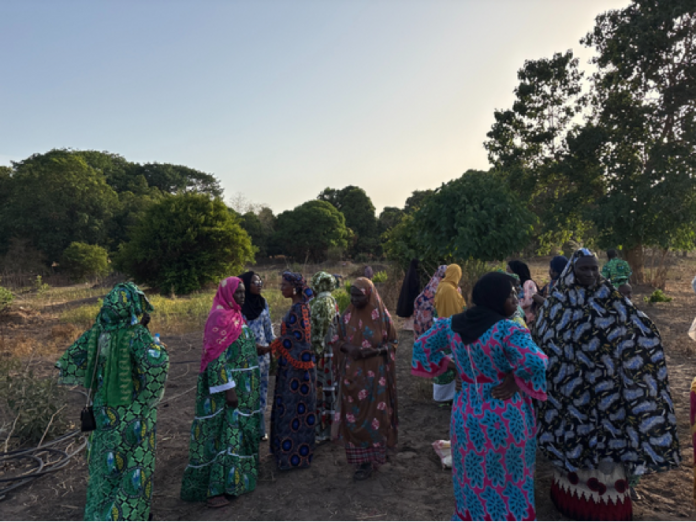
Cattle incursions are threatening the Salikenni women’s horticultural garden, located on a hill at the outskirts of Salikenni village. The garden, a vital source of income and food, cultivates a variety of crops, including spring onions, aubergines, tomatoes, and chilli peppers, among other vegetables. These plants are susceptible to damage from wandering livestock, which frequently break through the garden’s fragile wooden fences. The unchecked access of these animals poses a significant and ongoing threat to the garden's output.
A Vital Community Hub
The Salikenni women's garden has served as a critical source of livelihood for women in the community for over seven decades, providing both food and income. This long-standing role shows its profound importance to the socio-economic well-being of Salikenni's women and their dependents. Within the garden, women meticulously cultivate various crops, including popular staples such as spring onions, aubergines, tomatoes, and chilli peppers, alongside other essential vegetables. The produce harvested from this 1000-square-metre plot not only sustains their families directly, ensuring food security, but also allows them to sell surplus crops at local markets. The income generated from these sales is then crucially used to support household expenses and cover essential school fees for their children, further solidifying the garden's role as a cornerstone of community welfare and development. The continuous operation of the garden for such an extended period notes its integral place in the fabric of Salikenni village life.
The Unchecked Threat
Cattle herds roam freely in the area surrounding the Salikenni women's garden, frequently breaking through the garden’s fragile wooden fences. Once inside the enclosure, the animals then trample and graze indiscriminately on the cultivated plants. This unchecked access poses a significant threat to the garden's output and the sustained efforts of the women farmers. The Salikenni women's garden spans approximately 1000 square metres, an extensive area where livestock incursions can cause widespread damage to various crops. The vulnerability of the current fencing, which consists of easily breached wooden structures, allows cattle to access and destroy a substantial portion of the garden. This directly impacts the women's ability to harvest produce for both consumption and sale, jeopardizing their livelihoods. The continued presence of errant cattle and their destructive actions undermine the garden's productivity and the vital economic support it provides to families within the community. The repeated destruction necessitates constant repairs and replanting, draining resources and time from the women.
Seeking Lasting Solutions
The women cultivating the Salikenni garden are demanding a strong, durable fence to protect their 1000-square-metre plot from persistent livestock incursions. They have reported the cattle invasions to both village leaders and local authorities, detailing the damage and disruption caused, but these efforts have not yet resulted in a lasting solution to the problem. Despite these significant challenges, external support has been provided to the garden in other key areas. The Njeng juli Kilin Diaspora Association previously supported the garden by installing a borehole, a critical infrastructure improvement that significantly enhanced water access for cultivation, thereby boosting crop resilience and yield potential. Additionally, Mr. Abu Kalleh, a business entrepreneur based in the USA and a native of Salikenni village, is actively introducing agricultural support initiatives. These initiatives are designed to further empower the women farmers, including providing much-needed seeds to the women and establishing a market for their produce, which helps ensure their diligent efforts translate into tangible economic benefits. However, the fundamental issue of livestock protection remains critical for the garden's sustained success and the security of the women's livelihoods.