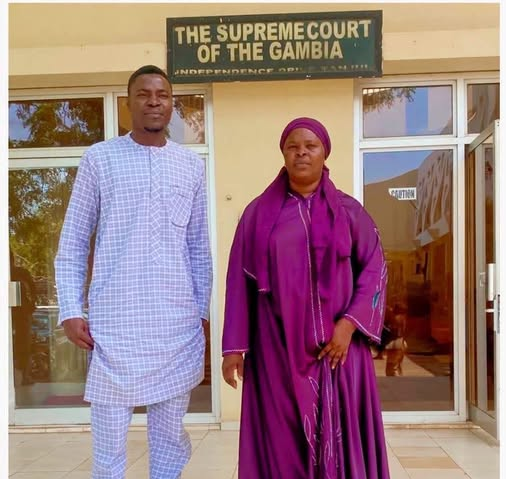
The Gambia Court of Appeal on Monday, July 13, 2026, adjourned the appeal in the police shooting case involving Ousainou Bojang and Amie Bojang after the latter appeared without legal representation. The adjournment was a consequence of the withdrawal of Amie Bojang's lawyer, Lamin K. Mboge. The court action means that proceedings cannot continue until Bojang secures new counsel or decides to represent herself. This significant procedural delay shows the intricate nature of criminal appeals and the critical importance of legal representation in such matters. The decision by the court to grant an adjournment reflects a commitment to ensuring due process and the right to a fair hearing for all parties involved, particularly in cases with high public interest.
Amie Bojang's lack of legal counsel became apparent during the scheduled court appearance, leading to the postponement of the appeal. The case concerns the shooting incident that occurred in Sukuta-Jabang, which has been a subject of ongoing legal proceedings and public scrutiny. The court's decision to adjourn shows the procedural requirements for legal representation in such high-profile cases, particularly within the context of a criminal appeal where the stakes are considerably high for the accused. The absence of counsel for Amie Bojang necessitated a pause in the appellate process, as the court prioritized the integrity of the legal proceedings and the respondent's constitutional rights.
Legal Representation Issues Emerge
Counsel Lamin K. Mboge formally filed a notice withdrawing from representing Amie Bojang, the second respondent in the police shooting appeal. The withdrawal meant Amie Bojang appeared in court without legal representation for the scheduled hearing. This development introduced an unexpected hurdle in the continuation of the appeal proceedings. During the proceedings, Amie Bojang confirmed to the court that she had received the withdrawal letter from Counsel Mboge, acknowledging his decision to no longer act on her behalf. Her confirmation to the court was a key step in formalizing the change in her legal standing and ensuring that the court was fully appraised of the situation.
State Counsel A. Gibba addressed the court regarding the situation, emphasizing the importance of legal representation for Amie Bojang. Gibba stated, "because the matter is a criminal appeal, it was important that she secure counsel so that the case could continue immediately after the court vacation." This statement noted the state's view on the necessity for the respondent to have proper legal counsel, particularly given the nature of the criminal appeal and the serious implications it carries. The State Counsel’s remarks showed the procedural fairness required in such cases, even from the prosecution's perspective. The court's subsequent adjournment reflected the procedural requirement for the presence of legal representation, allowing Amie Bojang time to secure new counsel or determine her approach to self-representation. The withdrawal of Counsel Mboge introduced a significant delay, impacting the timeline for the continuation of the appeal proceedings following the court's recess period. This delay, while inconvenient for the court calendar, was deemed essential to uphold the principles of justice.
The process of securing new legal representation can often be complex and time-consuming, especially in a case of this magnitude. The court's decision to grant an adjournment recognized these practical challenges, providing Amie Bojang with a reasonable period to address her legal needs. This approach ensures that the appellate process remains fair and equitable, preventing any potential prejudice that might arise from an unrepresented party facing a criminal appeal. The court's careful handling of this procedural issue demonstrates its commitment to upholding the rule of law and protecting the rights of individuals within the judicial system.
Background of the High Court Acquittal
The appeal before the Gambia Court of Appeal originates from the State's challenge to a High Court decision that acquitted and discharged both Ousainou Bojang and Amie Bojang. The State is currently seeking to overturn this High Court judgment, arguing that the lower court erred in its findings. This appeal represents a key stage in the legal process, as the State seeks to reverse the acquittal and potentially secure convictions against the accused. The fundamental purpose of the appeal is to review the High Court's application of the law and its assessment of the evidence presented during the original trial.
Earlier in the proceedings, Counsel L.K. Mboge, while still representing Amie Bojang, argued that the appeal itself was incompetent because it had been filed without obtaining the necessary leave of the court. This preliminary argument, questioning the very legitimacy of the State's appeal, introduced a significant legal hurdle that the Court of Appeal must address before delving into the merits of the case. The Court of Appeal has yet to determine that preliminary argument, indicating that fundamental procedural questions remain outstanding. This procedural challenge, if successful, could potentially invalidate the entire appeal, rendering further proceedings unnecessary.
Ousainou Bojang was accused of fatally shooting two police officers at the Sukuta-Jabang Traffic Lights in September 2023. This incident drew widespread attention and led to a high-profile investigation. Following the incident, Ousainou Bojang was arrested in neighboring Senegal and subsequently extradited to The Gambia to face charges related to the shootings. The extradition process itself noted the international cooperation involved in bringing the accused to justice. Amie Bojang was also charged in connection with this case, facing accusations related to her alleged involvement in the events surrounding the shooting.
The High Court ultimately acquitted and discharged both Ousainou Bojang and Amie Bojang. The court found that the prosecution had failed to prove its case to the standard required in criminal proceedings, which is typically proof beyond a reasonable doubt. This finding by the High Court was a significant development, leading to the release of both individuals. Following this acquittal, the State lodged an appeal before the Gambia Court of Appeal to challenge the High Court's ruling, asserting that there were errors in the original judgment that warrant a reversal. The State's decision to appeal shows its belief that the evidence presented was sufficient to secure a conviction, or that the High Court misapplied legal principles in its decision. The appeal process provides an opportunity for a higher court to review the lower court's judgment for any legal or factual errors.
Court Proceedings and Future Dates
The Gambia Court of Appeal granted Amie Bojang time to engage a new lawyer, acknowledging the procedural necessity for legal representation. The Judge held that Amie Bojang should be given adequate time to obtain legal representation. The Judge stated, "in the interest of justice and to safeguard Amie Bojang’s right to a fair hearing, she should be given adequate time to obtain legal representation before the appeal proceeds." This decision followed the withdrawal of her previous counsel, Lamin K. Mboge, and was key for ensuring that her constitutional right to legal counsel is upheld. The court's emphasis on a fair hearing notes the fundamental principles guiding the judicial process.
State Counsel A. Gibba and F. Touray appeared for the State during the proceedings. Counsel Gibba reiterated the importance of legal counsel for Amie Bojang, stating, "because the matter is a criminal appeal, it was important that she secure counsel so that the case could continue immediately after the court vacation." This statement from the prosecution further showed the collective understanding within the court that proper legal representation is indispensable for the integrity of the appellate process, especially in criminal matters. Representing the first respondent, Ousainou Bojang, was Counsel Lamin J. Darboe, who was present and ready to proceed with his client's representation. The court noted that the upcoming month falls within the annual court vacation, influencing the scheduling of future hearings. This vacation period will provide Amie Bojang with additional time to secure new legal representation before the appeal can resume, offering a practical window for her to address this critical issue.
The court's decision to factor in the annual vacation period demonstrates a pragmatic approach to managing the judicial calendar while accommodating the respondent's need for legal counsel. This thoughtful scheduling ensures that Amie Bojang is not unduly pressured or disadvantaged by the sudden withdrawal of her lawyer. The adjournment, therefore, serves a dual purpose: to allow for the acquisition of new counsel and to align with the court's operational schedule, thereby facilitating a smoother resumption of proceedings once the vacation concludes.
Implications for the Appeal
The Court of Appeal adjourned the matter for mention to October 20, 2026. This specific date provides a clear timeline for the next steps in the legal process. Amie Bojang intends to retain another lawyer and anticipates engaging new counsel by next month (August 2026). This proactive approach by Amie Bojang indicates her commitment to securing legal representation promptly, which is essential for the smooth continuation of the appeal. Her expectation to have new counsel by August 2026 aligns well with the court's vacation period, allowing her lawyer sufficient time to prepare before the next court date.
The appeal could not proceed until the courts resume in the next term, following the annual court vacation. This hiatus provides a necessary pause, allowing all parties to prepare for the subsequent stages of the appeal. A preliminary argument concerning the appeal's competency, raised by Counsel L.K. Mboge in earlier proceedings, has yet to be determined by the Court of Appeal. This unresolved procedural question adds another layer of complexity to the case, as its outcome could significantly impact the future direction of the appeal. The Court of Appeal will need to address this argument before it can fully delve into the substantive merits of the State's challenge against the High Court's acquittal.
This adjournment allows Amie Bojang time to finalize her legal representation before the appeal can continue, ensuring that she is adequately prepared for the legal challenges ahead. The decision reflects the judiciary's commitment to upholding the constitutional rights of the accused, even when faced with procedural delays. The successful engagement of new counsel will be a critical step in enabling the appeal to move forward, allowing the Court of Appeal to address both the preliminary competency argument and, subsequently, the substantive issues raised by the State's challenge to the High Court's judgment. The resolution of this appeal is keenly awaited, given the high-profile nature of the original incident and the significant legal questions at stake.