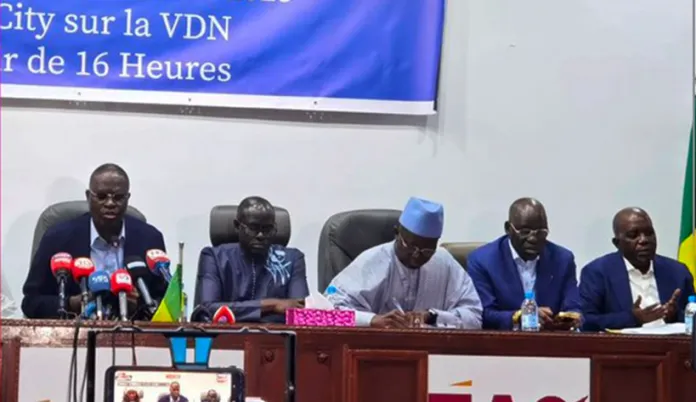
The Centre for Sustainable Development and Policy Studies (The Policy Institute) at the University of The Gambia (UTG) has issued a warning concerning the potential economic repercussions of the Iran conflict for The Gambia. The institute's assessment notes significant risks to the Gambian economy stemming from the ongoing situation, showing the nation's vulnerability to global economic shocks. The official launch event for this critical warning took place on Wednesday, 3 June 2026, marking the inaugural session of the Policy Institute Seminar Series. During this significant event, representatives gathered at the UTG Conference Hall, located in Kanifing, to present the findings and discuss the broad implications for the West African nation. Dr. Amadou Jallow, the Director of the Policy Institute, played a key role, presenting a full policy brief that meticulously detailed the economic implications of the ongoing conflict. The institute emphasized the urgent need for strong policy considerations to mitigate future economic challenges and bolster the nation's resilience.
Global Shocks and Fuel Prices
The Gambia faces significant exposure to global economic shocks, a vulnerability largely attributed to its profound reliance on imported fuel, food, and other critical commodities. This import dependency means that international events can have immediate and substantial domestic repercussions. The ongoing conflict in Iran has directly triggered a petroleum import shock, which has profoundly impacted the West African nation. As a direct consequence of this global instability and supply chain disruption, fuel prices have subsequently risen by as much as 40 percent. This sharp increase in energy costs places immense pressure on both consumers and businesses across the country.
In response to these escalating costs and to cushion the impact on its citizens, the Gambian government has allocated significant resources. Government spending on fuel subsidies has exceeded D500 million within a two-month period alone. This substantial financial intervention reflects the government's efforts to stabilize prices and alleviate the burden on consumers amidst the volatile global market conditions. The expenditure notes the immediate and substantial economic pressure stemming from international events on The Gambia's import-dependent economy, demonstrating the direct link between geopolitical developments and domestic financial outlays. The institute's analysis shows that such subsidies, while necessary, represent a significant drain on national resources that could otherwise be allocated to development projects.
Remittances and Tourism Impact
The Gambia's economy also faces significant risks through its reliance on two other key pillars: remittances and tourism. These sectors are vital for national income and household livelihoods, making them particularly sensitive to global disruptions. Approximately 87 percent of the country's estimated annual remittance inflows, which total an impressive $872 million, pass through corridors that could be severely affected by wider global economic disruptions. These substantial remittances are a key source of income for thousands of Gambian households, providing essential financial support and contributing significantly to the national economy. The Policy Institute notes that any disruption to these critical financial channels, whether due to economic slowdowns in sending countries or increased transaction costs, could have widespread and severe domestic implications, impacting poverty levels and household stability.
The institute warns that uncertainty in global markets resulting from the Iran conflict could negatively affect tourism revenues during the upcoming 2026/27 season. The tourism sector is a vital component of The Gambia's economy, serving as a major provider of employment and a key source of foreign exchange. Potential instability or reduced consumer confidence globally could deter international travel, thereby impacting visitor numbers and revenue generation for the West African nation. The institute stresses that a downturn in tourism would not only affect direct service providers but also have ripple effects across the entire economy, impacting local businesses, artisans, and the informal sector.
Food Security and Policy Brief
The Gambia faces increasing food and agricultural vulnerabilities, primarily due to its heavy reliance on imports and rising fertiliser prices, according to the Centre for Sustainable Development and Policy Studies. This dependency on external sources for both food staples and agricultural inputs exposes the nation to external economic shocks, particularly those affecting global supply chains and commodity markets. Such vulnerabilities are exacerbated by global events like the Iran conflict, which can drive up shipping costs and commodity prices.
The Policy Institute's brief provides new data and recommendations designed to assist policymakers in mitigating the potential impact of such external shocks on the Gambian economy. The document aims to inform strategic decisions that could enhance resilience against future global instabilities, particularly concerning food security and agricultural sustainability. By offering data-driven insights, the brief seeks to empower the government to develop proactive strategies that safeguard the nation's food supply and support its agricultural sector against external pressures.
Institute's Background and Role
The warning from The Policy Institute was issued during the official launch of its Seminar Series, a platform designed to foster evidence-based discussions on critical national issues. Dr. Amadou Jallow, the distinguished Director of the Policy Institute, presented a detailed policy brief at the event. This brief specifically addressed the complex economic implications of the ongoing Iran conflict for The Gambia, providing a full analysis for attendees. The Policy Institute, formally known as the Centre for Sustainable Development and Policy Studies, was established two years ago. Its creation received significant support from the United Nations Development Programme (UNDP), indicating its integral role in contributing to evidence-based policymaking and sustainable development initiatives within the country. The institute’s core focus includes analyzing global events and their potential impact on the Gambian economy, providing invaluable insights and actionable recommendations to national stakeholders. Its recent brief shows its unwavering commitment to informing policy decisions that can enhance the nation's resilience to external economic shocks and promote long-term sustainable development.