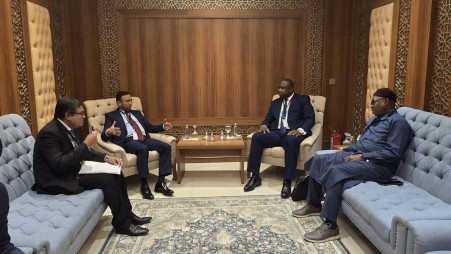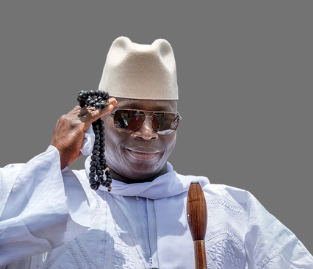
Former President Yahya Jammeh is expected to announce the stance of his “No To Alliance” movement regarding the upcoming 5th December presidential election. The announcement comes amidst ongoing discussions about potential political coalitions in The Gambia, as the country prepares for a key electoral period. Jammeh will soon announce the position of his “No To Alliance” movement ahead of the 5th December presidential election, a declaration that is highly anticipated by both supporters and political analysts.
The former president's "No To Alliance" movement has been a prominent voice in the political landscape ahead of the election. Political observers suggest that forming a coalition offers "the bigger chance" of achieving electoral success in December, a sentiment widely held among opposition factions aiming to consolidate their strength. Yahya Jammeh, currently residing in Equatorial Guinea, has maintained a significant influence on a segment of the electorate, particularly in areas like Foñi Kansala. His movement's decision is anticipated to impact the strategies of other political parties vying for power, potentially reshaping the electoral dynamics.
Movement's Strategic Consultations
Jammeh’s return to The Gambia is considered critical to any potential coalition agreement or partnership, according to sources familiar with the ongoing discussions within his movement. This condition shows the central role that the former president's physical presence plays in the strategic calculations of his loyalists. The “No To Alliance” movement has been actively engaged in rebuilding its internal structures, a process that includes extensive consultations with its members across various regions. These consultations aim to solidify the movement's direction and gather input from its base before making a definitive announcement on its electoral strategy. This full outreach ensures that the final decision reflects the collective will and strategic aspirations of its diverse membership.
The movement has indicated that it has not ruled out any opposition party for a potential coalition. This includes prominent parties such as the United Democratic Party (UDP), the United Moral Congress (UMC), and the National Democratic Party (NDP). This broad consideration suggests a flexible approach to forming alliances ahead of the December election, focusing on strategic partnerships that align with the movement's objectives and offer the best pathway to electoral victory. The openness to engage with various political entities notes a pragmatic stance in the pursuit of a unified opposition front.
Yahya Jammeh has expressed a firm commitment to return to The Gambia. His stated intention is to live as a normal citizen, supporting ongoing peace and reconciliation efforts within the country. This commitment shows a key aspect of the movement's internal discussions, linking his personal return to the broader political landscape and potential for national unity. The consultations are expected to inform the movement's final decision on whether to join a coalition or contest the election independently, with Jammeh's return being a significant factor in these deliberations.
Jammeh's Return and Conditions
Any final decision regarding the movement's electoral strategy will be made by the "No To Alliance" executive, following consultations with former President Yahya Jammeh and his supporters both in The Gambia and among the diaspora. This consultative process ensures that all key stakeholders have a voice in shaping the movement's future direction. The "No To Alliance" faction has consistently maintained its loyalty to Jammeh, emphasizing that his input is considered decisive in shaping the movement's electoral approach. This indicates that his perspective will heavily influence whether the movement pursues a coalition or an independent path in the upcoming election, reinforcing his enduring authority within the group.
The movement has stated that it has not closed the door on the possibility of fielding its own presidential candidate. This option remains on the table should its conditions for a coalition, which prominently include Jammeh's return to The Gambia, not be met by potential partners. Jammeh, currently in Equatorial Guinea, has provided assurances that his return would not pose any security challenge to the country or its citizens. These assurances are intended to allay any concerns regarding his presence and facilitate his reintegration into Gambian society. These conditions show the central role his potential return plays in the movement's strategic deliberations ahead of the 5th December presidential election, making it a critical bargaining chip in any alliance negotiations.
Historical Context and Past Alliances
Yahya Jammeh governed The Gambia for 22 years after taking power in a 1994 coup. His lengthy tenure left an indelible mark on the nation's political and social fabric. He was subsequently defeated in the December 2016 presidential election by coalition candidate Adama Barrow, marking a historic shift in Gambian politics. Following a period of political deadlock and regional intervention by the Economic Community of West African States (Ecowas), Jammeh conceded the election and went into exile in January 2017. He has since been based in Equatorial Guinea, where he was granted asylum. Despite his exile, the "No To Alliance" movement, loyal to Jammeh, has maintained political relevance and a dedicated grassroots following. In the 2021 presidential election, the movement backed the Gambia Democratic Congress (GDC) leader Mamma Kandeh. The movement asserted that its grassroots base contributed significantly to GDC’s vote tally during that election, demonstrating its capacity to influence electoral outcomes even without Jammeh's direct presence in the country.
Quotes and Future Outlook
Sources indicate that the "No To Alliance" movement is likely to join an opposition coalition with the goal of unseating President Adama Barrow in the upcoming election. This strategic alignment reflects a common objective among various opposition groups. There is currently "no signal" from the movement suggesting it would support the incumbent, firmly positioning it within the opposition camp. Supporters of the movement have been advised to remain patient as they await former President Yahya Jammeh’s official announcement regarding their electoral stance. The decision is expected to clarify the movement's strategic direction ahead of the 5th December presidential election, providing much-needed clarity for both its members and the broader political landscape. The upcoming announcement will undoubtedly be a key moment in the lead-up to the elections, potentially reshaping alliances and electoral strategies across The Gambia.