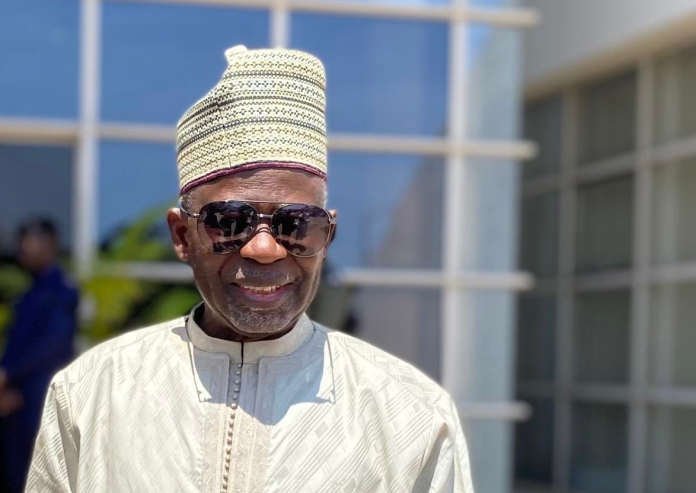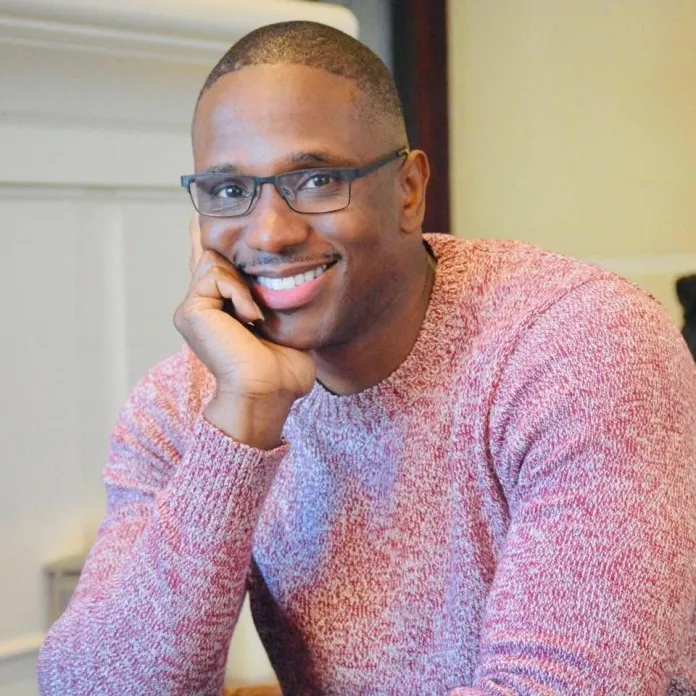
Veteran journalist Alagi Yorro Jallow has issued a strong rebuttal to Saikou Camara, the Administrative Secretary for Media and Communication of the United Democratic Party (UDP), criticizing Camara's recent social media commentary as "propaganda." Jallow's statement, titled “A Rebuttal to Saikou Camara: When Communication Becomes Propaganda, Truth Must Intervene,” directly challenges Camara's assertions regarding political figures and historical events in both The Gambia and Senegal. The veteran journalist, known for his incisive commentary and commitment to factual accuracy, took a firm stance against what he perceived as a distortion of historical narratives and political realities.
Jallow stated that Mr. Saikou Camara "has once again taken to social media with a narrative so careless, so historically unmoored, and so analytically impoverished that it demands a firm and unambiguous rebuttal." The veteran journalist noted the gravity of Camara's public pronouncements, particularly given his influential position as the Administrative Secretary for Media and Communication of the United Democratic Party (UDP), a prominent political entity in The Gambia. Jallow argued that Camara's attempt to equate the political trajectories of Ousainou Darboe, a revered veteran opposition leader in The Gambia, and Ousmane Sonko, a significant political figure in Senegal, is "not merely a lapse in judgment; it is a collapse of intellectual discipline." This comparison, according to Jallow, lacked the necessary historical context and analytical rigor expected from a political communicator. Jallow emphasized the importance of rigorous analysis and thorough investigation in public discourse, citing Mao Zedong's dictum, "'No investigation, no right to speak'." He showed that responsible communication, especially from a party official, requires a deep understanding of facts and their implications. He concluded, "Mr. Camara’s commentary falters because it lacks truth and offers partisan comfort disguised as analysis," suggesting that Camara's statements served a political agenda rather than an objective representation of facts.
Historical Inaccuracies Debunked and Political Trajectories Clarified
Journalist Alagi Yorro Jallow stated that Saikou Camara's comparison between Ousainou Darboe and Ousmane Sonko was "historically inaccurate and intellectually flawed." Camara, the Administrative Secretary for Media and Communication of the United Democratic Party (UDP), had drawn parallels between veteran opposition leader Ousainou Darboe and Senegalese politician Ousmane Sonko in his social media commentary, a comparison that Jallow found deeply problematic and misleading. Jallow showed the importance of thoroughness in analysis, reiterating Mao Zedong’s saying, “No investigation, no right to speak,” as a foundational principle for any credible public statement, especially concerning complex political histories.
Jallow argued that Darboe’s imprisonment in 2016 resulted from acts of civil disobedience, which he characterized as a principled stand for constitutional rights. This civil action, according to Jallow, was undertaken in defense of fundamental constitutional rights following the death of opposition activist Solo Sandeng, a key moment in The Gambia's political history that galvanized widespread opposition to the then-incumbent regime. In stark contrast, Jallow stated that Sonko’s imprisonment stemmed from personal legal issues, specifically mentioning allegations of rape. This distinction, Jallow emphasized, is key for understanding the differing contexts and implications of their respective legal challenges, asserting that conflating the two demonstrated a profound misunderstanding or deliberate misrepresentation of facts. The veteran journalist noted that the nature of their legal troubles and the motivations behind them were fundamentally different, making any direct comparison intellectually unsound.
Regarding political developments in The Gambia, Jallow argued that President Adama Barrow dismissed Darboe and other UDP executive members from his government because their visions diverged significantly. This divergence, Jallow suggested, was not merely a matter of policy but reflected a deeper ideological split within the nascent post-Jammeh administration. He further suggested that Darboe had attempted to assert dominance within the government structure, leading to an untenable working relationship with President Barrow. This assertion paints a picture of internal struggles for power and influence within the coalition government, contributing to the eventual political reshuffling.
Jallow also addressed the political landscape in Senegal, clarifying the circumstances of President Diomaye Faye's election, an event that had significant regional implications. He stated that Diomaye Faye was elected under the ‘Diomaye Président Coalition,’ a broad alliance of political forces, and not under the banner of PASTEF, as the party had been officially dissolved prior to the election. This detail, Jallow noted, is vital for an accurate understanding of Senegalese electoral politics and the legal framework within which the election was conducted. Jallow further noted that Ousmane Sonko, despite his eventual strong support for Faye, initially supported other candidates, namely Habib Sy and Cheikh Tidiane Dieye, before ultimately joining Diomaye Faye’s presidential campaign. This sequence of events, according to Jallow, demonstrates the fluid and strategic nature of political alliances, particularly in the lead-up to a highly contested presidential election, and further differentiates Sonko's political journey from Darboe's.
Context of 2016 Uprising: A National Movement
Journalist Alagi Yorro Jallow asserted that the 2016 coalition, which ultimately led to the defeat of former President Yahya Jammeh, represented a national uprising rather than a project specific to the United Democratic Party (UDP). This assertion directly challenged a narrative he attributed to Saikou Camara, Administrative Secretary for Media and Communication of the UDP, which Jallow viewed as an attempt to appropriate a collective victory for a single political entity. According to Jallow, the movement against Jammeh drew broad support across various segments of Gambian society, signifying a collective effort to bring about political change that transcended party lines and individual political ambitions. He emphasized that the coalition’s formation and success were rooted in widespread public discontent and a shared desire for democratic transition, transcending any single political party's agenda. The veteran journalist noted that the momentum for change was a culmination of years of activism and public suffering under an authoritarian regime, making it a truly national endeavor.
Jallow further stated that Adama Barrow, who eventually became president, was not Ousainou Darboe's initial preferred candidate for the coalition's presidential nominee. This detail is key for understanding the complex dynamics within the opposition alliance. Instead, Barrow emerged through a negotiated process among the opposition parties forming the coalition, a testament to the compromises and strategic considerations involved in uniting disparate groups against a common adversary. This process involved various stakeholders and extensive discussions to select a consensus candidate capable of uniting the diverse opposition forces against the incumbent regime. Jallow's account notes the collaborative and often complex nature of political alliances formed under pressure, particularly in the run-up to a key election aimed at ending an authoritarian rule. The selection of Barrow, Jallow implied, was a strategic choice by the broader coalition, not solely dictated by any one party leader, further reinforcing the idea of a national, collective effort.
Critique of Communication Style: Prioritizing Truth Over Partisan Comfort
Journalist Alagi Yorro Jallow characterized Saikou Camara's communication style as displaying a pattern of emotional rhetoric, selective memory, and claims that lacked verification. Jallow, in his full rebuttal, emphasized that such an approach undermined the credibility of Camara's commentary, particularly given his influential role as Administrative Secretary for Media and Communication of the United Democratic Party (UDP). The veteran journalist suggested that Camara's method prioritized partisan comfort and political expediency over rigorous analysis and factual accuracy, leading to what he termed "intellectual impoverishment" in public discourse. This assessment points to a broader concern about the quality of political communication and the responsibility of public figures to adhere to truth and verifiable information when engaging with sensitive political and historical subjects, especially in a nascent democracy. Jallow argued that such a style not only misleads the public but also erodes trust in political institutions and the media.
Jallow further showed his points by invoking traditional wisdom, quoting Mandinka and Wolof proverbs to illustrate the enduring nature of truth and the futility of attempting to distort it. He cited the Mandinka proverb, "What is crooked cannot be made straight by mere words," suggesting that no amount of rhetoric, however emotionally charged or skillfully delivered, can alter fundamental inaccuracies or injustices. This proverb served to highlight the immutable nature of facts and the ultimate failure of attempts to manipulate them through language alone. Jallow then reinforced this sentiment with the Wolof proverb, "Lu wóor du sedd. Truth does not shiver," asserting that truth is inherently resilient and unshakeable, regardless of attempts to obscure or manipulate it through partisan narratives. These proverbs served to frame Jallow's argument that Camara's communication style ultimately fails because it deviates from factual grounding, relying instead on narratives that are easily disproven or lack substantiation, thereby failing to withstand the scrutiny of objective analysis. Jallow's call for truth and rigor in political communication stands as a significant challenge to the current state of public discourse.