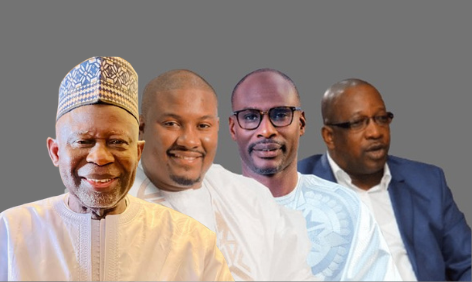
A newly formed Coalition Taskforce Mediation Committee (CTMC) is working to unite all opposition parties and independent voices behind a single candidate for the upcoming 2026 presidential election in Gambia. Professor Yerro Mballow, chairman of the CTMC, stated the committee’s objective is to promote a flag of unity among diverse political entities. This overarching goal shows the CTMC's commitment to fostering a cohesive front against the incumbent. "We in the committee want all opposition parties and independent voices to rally behind one candidate where that candidate will carry the flag of unity. That is what we are promoting," Professor Mballow said, articulating the core mission of the coalition. He added, "We have seen exactly what are the results of each of these parties, be it UDP, GDC, APP-Sobeyaa, NUP and others," indicating an awareness of past electoral performances and the need for a unified approach to overcome fragmentation. Mballow further emphasized that any member can choose a political party of their choice, "not per se their party leader," noting a degree of individual autonomy within the collective effort. The CTMC is actively overseeing talks aimed at selecting this single opposition candidate for the December election, a critical step in their strategic planning.
Developing a Unified Strategy
The Coalition Taskforce Mediation Committee (CTMC) has established a strong system to evaluate the strength of participating parties, utilizing the results from the 2021 presidential election for its assessments. This data-driven approach ensures that the historical performance of established political entities is factored into the selection process. For newer political parties that did not partake in the 2021 election, a distinct methodology has been developed to accurately determine their respective percentages of support. This ensures that emerging political forces are not disadvantaged due to their recent formation or lack of prior electoral history. The committee confirmed that political movements and parties not yet officially registered will be integrated into the process through representation from civil society organizations. This inclusive approach broadens the coalition's base and ensures that a wider spectrum of Gambian society is represented in the selection of the flag bearer.
Nominations for the single opposition candidate are exclusively open to parties actively involved in the coalition-building process. This ensures that only committed and engaged entities contribute to the candidate selection, fostering a sense of shared ownership and responsibility. The CTMC's voting system, designed for scenarios where consensus is not immediately reached, will incorporate several key factors. These include the electoral strength of individual parties, which acknowledges their proven support bases; equitable regional representation across the country, ensuring geographical balance and broad appeal; and the participation of civil society groups, which brings diverse perspectives and grassroots insights into the decision-making process. This full approach is designed to prevent "winner-takes-all" disputes among the opposition factions, a common pitfall in multi-party alliances. By considering multiple dimensions of support and representation, the committee aims for the selection process to genuinely reflect broad national support for the chosen candidate, thereby strengthening their legitimacy and viability.
Chairman Details Selection Process
The Coalition Taskforce Mediation Committee (CTMC) has outlined its preferred approach for selecting a unified opposition candidate. The committee's primary method for choosing the candidate is through consensus among all participating entities. This strategy aims to ensure broad agreement and mitigate potential internal divisions before the December election, presenting a united front to the electorate. The emphasis on consensus reflects a desire for deep-seated unity rather than a simple majority decision, which could leave some factions feeling marginalized.
Should stakeholders be unable to reach a unanimous decision on a single candidate, the CTMC has established a contingency plan. In such a scenario, a voting process will be initiated to determine the candidate. This mechanism is designed to provide a definitive resolution if consensus efforts prove unsuccessful, ensuring that a single candidate is ultimately presented to the public and that the coalition's efforts are not derailed by deadlock. The voting system, as previously detailed, will take into account various factors to ensure fairness and representativeness.
The committee also clarified that its members retain the autonomy to support political parties of their choice within the coalition. This provision emphasizes individual freedom of association while working towards the collective goal of a unified opposition, allowing diverse viewpoints to coexist within the broader framework of the coalition. This balance between individual liberty and collective action is key for maintaining harmony and commitment among the disparate groups forming the alliance.
Timeline and Next Steps
The Coalition Taskforce Mediation Committee (CTMC) is currently overseeing talks aimed at selecting a single opposition candidate for the upcoming December election. These discussions are key in shaping the political landscape for the next presidential contest. The committee has outlined a clear timeline for this selection process, providing a structured approach to what can often be a complex and contentious undertaking. The flag bearer who will represent the coalition in the 2026 presidential election is expected to be announced by July 11. This deadline sets a firm target for the coalition to finalize its candidate, allowing ample time for campaigning and preparation ahead of the main election. Meanwhile, opposition parties are intensifying their preparations for the 2026 presidential election, with various factions working to consolidate their positions ahead of the selection deadline. This includes internal strategizing, grassroots mobilization, and efforts to strengthen their individual platforms while also engaging constructively with the CTMC's mediation efforts. The concerted push by these parties shows the high stakes of the upcoming election and their determination to present a formidable challenge.