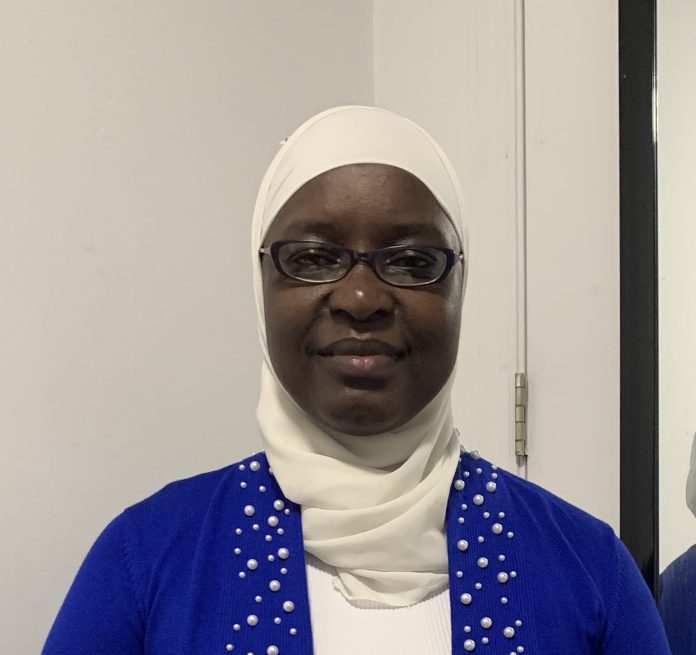
Presidential aspirant Mariama Khan has accused the police of unreasonable delay in issuing a permit for her planned nationwide tour, hindering her campaign efforts. Ms. Khan stated that she submitted an official request to the Inspector General of Police on February 19, 2026, seeking authorization for the tour. As of the time the article went to press, she had not received the permit, a situation she described as a significant impediment to her political activities.
Khan criticized the situation, asserting, "This is not how things should be. It is my constitutional right to stand for public office." The aspirant's remarks highlight concerns regarding the process for obtaining necessary permissions for political activities ahead of upcoming elections. Without the permit, her ability to conduct outreach across the country remains stalled, effectively preventing her from engaging with a broader electorate. Ms. Khan's campaign is particularly focused on a nationwide grassroots mobilization tour, which she views as key for her presidential candidacy for the December election.
The Permit Application Process and Bureaucratic Hurdles
Under Gambian law, politicians intending to use a microphone for public meetings are required to apply for a police permit. Presidential aspirant Mariama Khan has reported that she has not received any formal response following a series of screenings, interviews, document submissions, and providing access to her Facebook pages related to her permit application. This lack of official communication has left her team in limbo, unsure of the status or specific reasons for the delay.
Ms. Khan stated that she was called by the Police Criminal Investigations Unit (CIU) for an initial screening interview. During this interview, she was advised that her intended three-month nationwide tour could potentially impede the activities of other political parties, and she was asked to shorten its duration. In response to this request, Ms. Khan complied by reducing the tour's length and restricting her itinerary solely to the West Coast Region. This adjustment was made in an effort to demonstrate cooperation and facilitate the permit's approval, yet the process continued to face obstacles.
Despite these adjustments, progress on her application appears to have stalled. On June 15, Ms. Khan sent three representatives to Commissioner Jaiteh to inquire about the status of her permit. Commissioner Jaiteh informed them that he had not seen her application, indicating a potential breakdown in internal communication or processing within the police force. He then directed Ms. Khan's representatives back to Musa Camara at the Police Administration department, stating that Mr. Camara was the appropriate point of contact for such matters. However, Ms. Khan's representatives reported that Musa Camara subsequently refused to meet with them, citing that he was busy and had another mission, further exacerbating the feeling of being stonewalled.
The aspirant's efforts to secure the permit are specifically aimed at touring the country to mobilize for her independent candidacy. The ongoing delay in obtaining this authorization has significantly restricted her political activities, preventing public gatherings apart from house meetings conducted in Brikama. This limitation severely impacts her ability to reach potential voters and build momentum for her campaign in the lead-up to the December election.
Khan's Background and Candidacy for First Female President
Mariama Khan, a 49-year-old presidential aspirant, is campaigning to become Gambia’s first female president. Her professional background is extensive and distinguished, having previously served as a permanent secretary and as Secretary General and Head of Civil Service. These roles provided her with significant experience in public administration and governance at the highest levels.
Ms. Khan holds multiple academic qualifications, showing her commitment to education and development. She has earned master's degrees in sustainable international development, management of development, and criminal justice. She possesses a graduate certificate in security studies, which she obtained in the United States. Currently, Ms. Khan contributes to academia by lecturing at Lehman College, City University of New York, demonstrating her continued engagement with intellectual pursuits and public discourse.
Her campaign efforts have faced hurdles, with Ms. Khan alleging delays in obtaining a police permit for a nationwide tour. She has stated, "This is not how things should be. It is my constitutional right to stand for public office," reiterating her belief in fundamental democratic principles and the right to participate in the political process without undue obstruction. Her bid for the presidency is rooted in a desire to bring about change and offer a new vision for the nation, and the permit delay is perceived as a direct challenge to these aspirations.
Impact on Campaign and Unanswered Questions from Authorities
The permit sought by Mariama Khan is for a nationwide grassroots mobilization tour, intended to support her presidential candidacy for the upcoming December election. Ms. Khan is specifically seeking authorization to tour the country to mobilize for her independent candidacy. The ongoing delay in obtaining this permit has significantly restricted her political activities, preventing public gatherings apart from house meetings conducted in Brikama. This constraint limits her direct engagement with the public to smaller, more localized settings, hindering her ability to build a broad national coalition.
Regarding the permit application process, Kaaba Sowe, an officer with the Criminal Investigations Unit (CIU), informed Ms. Khan that the CIU had concluded its investigation and forwarded its findings to Police Administration and Operations for a final decision. This communication suggested that the initial investigative phase was complete, and the application was moving to the next stage. However, Commissioner of Operations Jaiteh initially told Ms. Khan's representatives that he had not seen her application when they visited him on June 15. Subsequently, Musa Camara, to whom Jaiteh referred them, stated he was not going to meet with them, citing that he was busy and had another mission. This series of events suggests a lack of coordination or transparency within the police department regarding the handling of her application.
Beyond the nationwide tour, Ms. Khan and her team also attempted to obtain a permit for a training session for mobilizers, which was ultimately refused. Police officials had asked them to submit a written request before conducting the training, but they reportedly never received a reply to that letter, leaving the training unapproved and unable to proceed. This additional refusal further illustrates the difficulties her campaign is facing in organizing even preparatory activities.
The Standard newspaper made several attempts over a period of days to seek clarification from the police regarding these matters but received no response. This lack of official comment from law enforcement adds to the ambiguity surrounding the permit delays. Ms. Khan further stated that the police are currently not responding to her messages, indicating a complete breakdown in communication between her campaign and the authorities responsible for issuing permits. This situation raises questions about the fairness and impartiality of the permit application process for political aspirants in the Gambia.