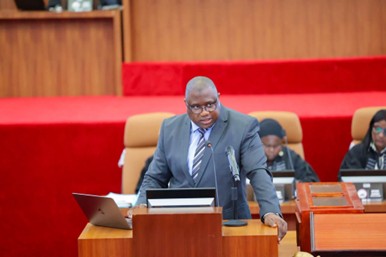
Coalition 2026, a political alliance, was unveiled in Brikama on September 6, 2026, with Lamin J Darboe taking the podium at the inauguration. The event, held in Brikama, marked the official launch of the coalition's aspirations for the upcoming political landscape. Darboe's speech at the inauguration event, however, did not prominently promote Talib Bensouda's candidacy for the upcoming December 5 poll, a detail that has not gone unnoticed by political commentators. This omission immediately raised questions about the strength of the alliance's internal dynamics.
Two weeks have elapsed since the coalition's inauguration in Brikama without any activity or statement from Lamin J Darboe, leading to suggestions that Talib Bensouda’s political divorce with Darboe is imminent. The prolonged silence from a key figure like Darboe, especially after such a high-profile launch, has fueled speculation regarding the true nature of their political partnership. This lack of engagement from Darboe has been interpreted by many as a significant indicator of discord within the nascent alliance. Observers claim that Coalition 2026 has failed its first test within its initial two weeks of existence, struggling to demonstrate cohesion and unified purpose from its very inception. The absence of any public show of support or joint activity has cast a shadow over the coalition's future prospects.
Legal Challenges and Disregard
The government whitepaper on the Local Government Commission is currently a topic of intense discussion in Banjul. This document, and its potential implications, are being closely watched by political actors and the public alike. Political observers widely expect that there will be ploys to bar Talib Bensouda from running for the presidency, anticipating strategic maneuvers designed to impede his political ambitions. In response to these potential challenges, Bensouda has proactively filed a preemptive legal suit against any adverse findings of the Local Government Commission Report, seeking to safeguard his eligibility.
An author published a detailed legal diagnosis titled “The Gambia Local Government Commission White Paper: A Preemptive Diagnosis of Barrow’s State House Witch-Hunt,” providing a critical analysis of the situation and addressing potential legal challenges. The author argues that a whitepaper does not constitute a court judgment, emphasizing the distinction between administrative findings and judicial rulings. They further assert that Section 24(3)(a) of the constitution presumes innocence for individuals, a fundamental principle of justice that should apply in this context. Additionally, the author notes that under Section 62(1) of the 1997 Constitution, only a court conviction can disqualify a candidate from holding office, showing the high legal threshold required for such a disqualification. This detailed legal perspective suggests that any attempt to bar Bensouda without a court conviction would face significant constitutional hurdles.
When Bensouda initiated his legal action, which is a significant and public step in his political defense, there was no statement of solidarity, legal brief, or press conference from Lamin J Darboe. This conspicuous lack of public support from Darboe during Bensouda's key legal challenge has been noted by political commentators as a telling sign of the deepening rift between the two political figures. The absence of any backing from Darboe, particularly given his own legal background, has been interpreted as a deliberate distancing.
Campaign Trail Silence
Talib Bensouda has commenced a courtesy-call campaign tour in the North Bank Region, which began with a rally in Salikenni, Baddibu, on Wednesday, September 16. This tour marks a critical phase in Bensouda's presidential campaign, allowing him to connect directly with potential voters. Bensouda's campaign activities have been observed closely following recent political developments, with every move scrutinized for signs of the coalition's health.
During the rally in Salikenni, a key event for Bensouda's campaign outreach, there was no sighting or involvement of Lamin J Darboe. No delegation from Darboe or the National Unity Party (NUP) was present at the event, despite the importance of such gatherings for demonstrating political unity. This absence marks a notable lack of public support from Darboe and his party during Bensouda's initial campaign outreach in the North Bank Region. The lack of their presence follows a period of perceived silence from Darboe regarding Bensouda's recent legal challenges, further solidifying the impression of a breakdown in their political alliance. The absence of Darboe and the NUP at this key campaign stop sends a clear message about the state of their partnership.
Underlying Political Dynamics
Lawyer Lamin J Darboe reportedly departed from the United Democratic Party (UDP) based on a principle related to a leadership challenge. This historical context provides valuable insight into Darboe's political motivations and his approach to party affiliations, suggesting a strong adherence to specific principles over unwavering party loyalty. His prior actions suggest a willingness to challenge established party structures when leadership principles are at stake, indicating a firm stance on internal party governance. Darboe's past decision to leave the UDP on such grounds shows a consistent pattern of prioritizing certain political ideals or leadership dynamics over mere party allegiance, a characteristic that observers suggest may significantly influence his current political engagements. This background is considered relevant in understanding the current strained relationship between Darboe and Talib Bensouda, as it notes Darboe's independent and principled approach to political alliances, which may now be clashing with the expectations of Coalition 2026.