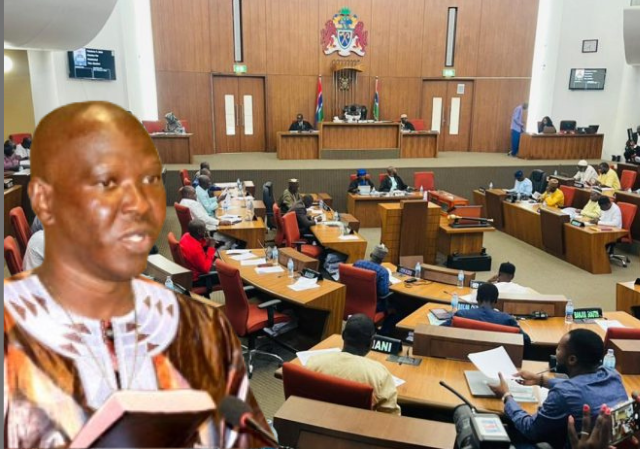
The Gambia's National Assembly noted that grants expected for the first quarter of budget execution in 2026 were not received. For that period, The Gambia anticipated receiving at least 4.5 billion dalasi in grants. The absence of these funds signals a shortfall in expected revenue streams, showing a significant challenge in the nation's fiscal planning. This situation notes a critical vulnerability in the country's reliance on external financing, prompting a closer examination of its internal revenue generation capabilities. The fact that grants were not forthcoming for the first quarter of budget execution in 2026 demands immediate attention and strategic adjustments to the national financial framework.
Revenue Performance Snapshot
Tax revenue in The Gambia exceeded expectations during the first quarter, according to recent figures. This positive performance in tax collection offers a glimmer of stability amidst other financial pressures. Conversely, non-tax revenue performed below anticipated levels for the same period, presenting a stark contrast to the success seen in tax collection. For the year 2025, tax revenue reached 27 billion dalasi, demonstrating a strong contribution to the national coffers. Non-tax revenue contributed 5 billion dalasi in 2025, indicating a significant disparity between the two primary revenue streams for the country. This imbalance is a cause for concern, as it points to an underutilized potential within the non-tax sector. The performance of non-tax revenue below expectations notes an area requiring urgent attention and strategic intervention for The Gambia's fiscal planning, especially given the unreliability of external grants.
The Case for Non-Tax Revenue
Grants constitute a key factor in The Gambia's budget estimates, which stood at 18 billion Dalasi. This substantial figure shows the profound role of external funding in the nation's financial planning and operations, often accounting for a significant portion of the annual budget. However, reliance on grants, as evidenced by the recent shortfall, can introduce considerable volatility into the budget, making the consistent performance of other revenue streams particularly critical for overall fiscal stability. Beyond grants, the government holds ownership in various enterprises, suggesting a substantial potential for additional income that remains largely untapped. The government, as an owner of enterprises, should receive dividends from such entities, which would provide a direct and internally generated source of revenue. This emphasizes the potential for non-tax revenue to be significantly bolstered through profit-sharing from state-owned businesses, providing a more stable and domestically controlled source of income compared to the often unpredictable nature of external grants. Improving the collection and performance of such dividends could significantly bolster the national treasury, reducing dependence on external aid and fostering greater financial autonomy.
Addressing Underperformance
Non-tax revenue should serve as the foundation for sovereign national wealth. This perspective suggests that income generated from government assets, services, and enterprises plays a direct and indispensable role in building and sustaining national financial strength, independent of external aid or direct taxation. Such revenue streams, including dividends from state-owned entities, fees for government services, and various other charges, contribute directly to the accumulation of national reserves and investment funds. By maximizing these internal sources, a nation can significantly enhance its fiscal autonomy and reduce reliance on volatile external grants or potentially burdensome debt. This approach emphasizes the strategic importance of efficient management and monetization of public resources to secure long-term economic stability and growth, ensuring that the nation's financial future is built on a solid, self-sustaining foundation. The proactive development and optimization of non-tax revenue streams are therefore not merely an option but a strategic imperative for The Gambia's long-term prosperity.