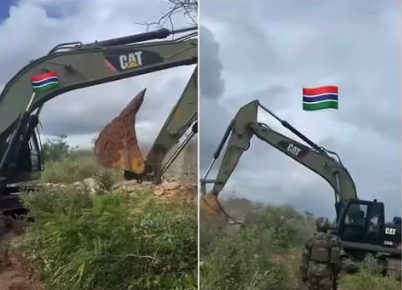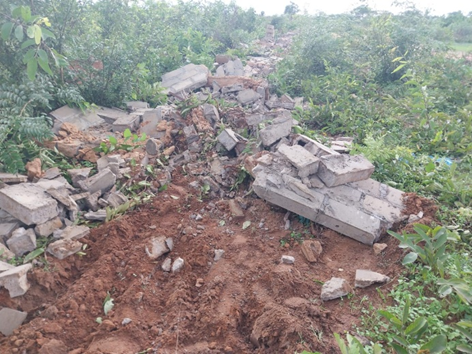
Senegalese Armed Forces used bulldozers to demolish over 200 meters of fencing surrounding the Gambian military post in Bullock on July 16. The incident, which saw the destruction of perimeter fencing, occurred in the Foni Berefet District of The Gambia's West Coast Region. Following the event, the Government of Senegal issued an official statement on Friday, July 17, addressing the border situation. This action by the Senegalese military has ignited a fresh round of diplomatic tensions between the two West African nations, showing the persistent challenges in managing their shared border. The demolition targeted a significant portion of the defensive perimeter around the Gambian military installation, raising concerns about territorial integrity and the use of force in resolving bilateral disputes.
Border Dispute Escalates
Bullock, a border village, is located in the Foni Berefet District within The Gambia's West Coast Region. This strategic location makes it a focal point for border management and security concerns for both countries. The core of the escalating dispute revolves around competing claims concerning the precise location of the international boundary between The Gambia and Senegal. This fundamental disagreement over demarcation lines has historically been a source of friction, leading to various incidents over the years. Authorities in Senegal have stated that they issued repeated warnings to Gambian authorities regarding alleged encroachments into Senegalese territory. These warnings, according to the Senegalese government, were part of an ongoing effort to resolve the perceived territorial violations through diplomatic channels before resorting to direct action. The Senegalese government maintains that these communications were largely unheeded, necessitating the recent intervention.
This recent incident follows historical tensions in the border region, which have occasionally flared into more significant confrontations. The historical context includes previous military actions taken by Senegal in response to what it perceived as territorial infringements. In May 2002, for instance, Senegalese military aircraft bombed the Gambian border village of Dimbaya, noting previous military actions in response to perceived territorial infringements. Such past events show the sensitivity of border issues between the two nations and the potential for rapid escalation if not managed carefully. The current situation in Bullock, therefore, is not an isolated event but rather the latest manifestation of a long-standing and complex border dispute that demands a full and lasting resolution.
Gambia's Diplomatic Response
The Gambian government characterized the recent demolition of its border fencing in Bullock as “profoundly provocative and totally unacceptable.” This strong condemnation signals The Gambia's official stance on the incident involving Senegalese Armed Forces, emphasizing its view that the action constitutes a serious breach of international norms and bilateral relations. The government’s statement conveyed deep concern over the unilateral nature of the Senegalese military's operation and its potential to destabilize the already delicate peace along the border. The Gambian authorities stressed that such actions undermine efforts to foster good neighbourly relations and mutual respect between sovereign states.
The Gambia’s Chief of Defence Staff, Lieutenant General Ousman Gomez, has firmly rejected the Senegalese claim that the demolished fence encroached on Senegalese territory. Lieutenant General Gomez's statement directly counters Senegal's justification for its actions, emphasizing the differing interpretations of the precise border demarcation. He reiterated the Gambian military’s position that the construction of the fence was undertaken strictly within The Gambia’s internationally recognized borders. The Gambian military leadership maintains that the fencing was erected within its sovereign territory, in line with established border protocols and previous agreements. They argue that any claim of encroachment is unfounded and based on an erroneous understanding of the actual boundary line. This fundamental disagreement over the exact location of the international boundary is at the heart of the current dispute, making it a critical point of contention that requires careful negotiation and resolution.
National Security Adviser Abubakarr Suleiman Jeng stated that President Adama Barrow intends to raise the matter with the president of the Economic Community of West African States (ECOWAS). This move indicates The Gambia's strategy to escalate the issue to a regional body for mediation and resolution, showing its commitment to diplomatic channels rather than direct confrontation. President Barrow's decision to involve ECOWAS notes the severity with which The Gambia views the incident and its potential implications for regional stability. The approach seeks to leverage regional frameworks to address bilateral tensions and prevent further escalation, demonstrating The Gambia's preference for institutional mechanisms to resolve disputes peacefully. By bringing the matter before ECOWAS, The Gambia aims to secure a fair hearing and a mediated solution that respects its territorial integrity and prevents future unilateral actions by its neighbour.
Senegal's Justification and Reassurance
Senegalese military authorities maintained that the Gambian military camp had extended into Senegalese territory, providing their rationale for the demolition of the border fencing. This claim forms the basis of Senegal's justification for its actions, asserting that the demolition was a necessary measure to reclaim its sovereign land. The Government of Senegal released a statement on Friday, July 17, following the incident, outlining its perspective and addressing the concerns raised. In its official communication, Senegal reaffirmed its commitment to maintaining friendly relations with The Gambia despite the border dispute. This commitment was articulated as part of Senegal’s broader stance on bilateral relations with its neighbour, emphasizing diplomacy as a core principle even amidst disagreements. The Senegalese government’s statement outlined that the actions taken were a response to perceived encroachments, which they assert were communicated to Gambian authorities prior to the demolition. They reiterated that repeated warnings had been issued to Gambian authorities about these alleged encroachments into Senegalese territory, with the hope that the issue could be resolved without direct intervention.
Senegal views the incident through the lens of upholding its territorial integrity, while simultaneously seeking to de-escalate tensions and preserve the long-standing ties between the two West African nations. The statement from Senegal aimed to clarify its position and prevent misinterpretations of its military actions, assuring the international community and The Gambia that its actions were not intended to provoke but to enforce its perceived territorial rights. The Senegalese authorities stressed that their actions were a last resort after attempts at diplomatic communication regarding the alleged encroachment proved unsuccessful. Despite the military action, Senegal emphasized its desire for continued cooperation and dialogue with The Gambia, recognizing the deep historical, cultural, and economic ties that bind the two countries.
Soldier Restraint and Official Praise
The Gambia maintains its commitment to seeking a peaceful solution through diplomatic channels, explicitly avoiding military action in response to the border incident. This commitment to non-aggression and dialogue is a cornerstone of The Gambia's foreign policy in this situation. Gambian soldiers stationed at the border post demonstrated remarkable restraint by not retaliating during the demolition of the fence, even in the face of what their government termed a "profoundly provocative" act. This disciplined conduct prevented a potentially dangerous escalation of the situation into an armed confrontation. Following the event, the Secretary General and Head of the Civil Service, Alieu Njie, reassured the soldiers that the government would pursue the matter diplomatically. He commended their professionalism and adherence to orders, recognizing that their restraint was key in preventing further bloodshed and allowing for a diplomatic resolution. This approach shows The Gambia's dedication to resolving the dispute through established peaceful means, prioritizing dialogue and regional mediation over military engagement. The government's praise for the soldiers' restraint notes its strategic decision to de-escalate tensions and seek a resolution through international and regional frameworks, rather than responding in kind to the perceived provocation. The Gambia insists on seeking a peaceful solution through diplomatic channels rather than military action, a principle it hopes will guide both nations in finding a lasting resolution to their border disagreements.